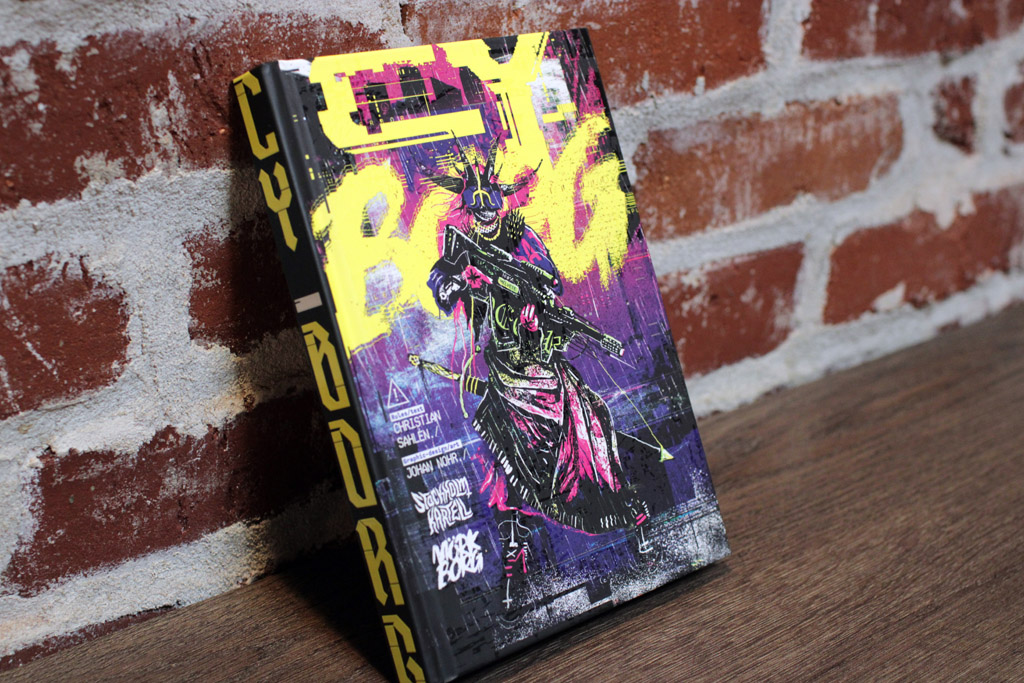
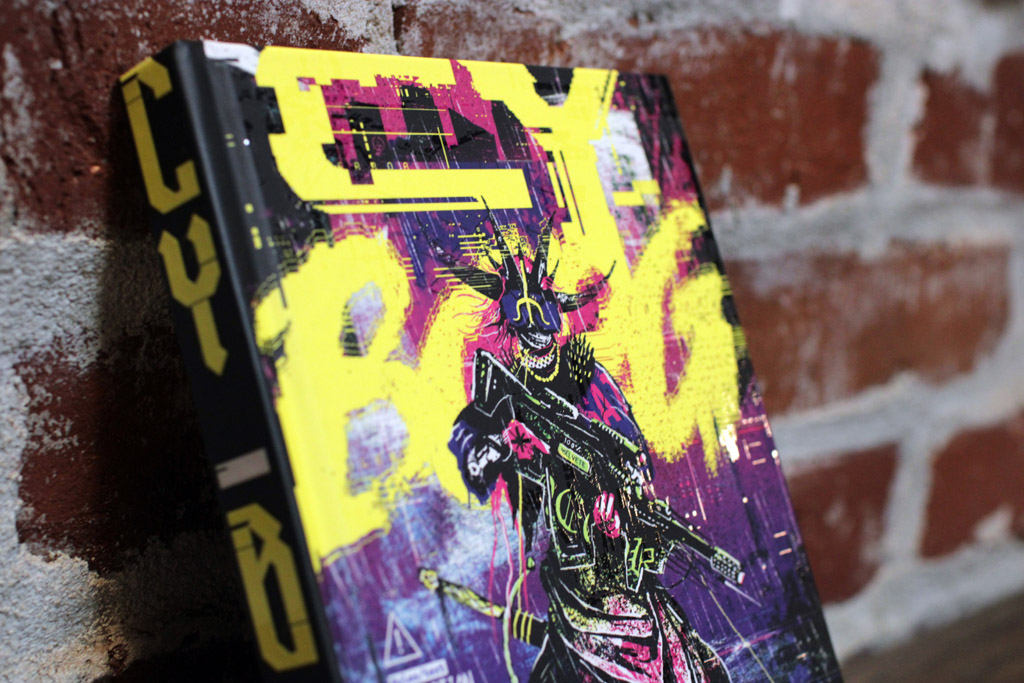
To open the manual for CY_BORG is to invite a digital infection into the room. Created by Christian Sahlén and Johan Nohr of the Stockholm-based collective Stockholm Kartell, CY_BORG offers a broken, neon, visceral playground for improvisation. It is a work of industrial noise and glitch art. A world where the megacity of Cy is a corporate hellscape that is aggressively failing.
The Architect of a Fractured Future
Published by Free League, the game serves as the urban, high-tech counterpart to Mörk Borg and the “doom-metal” ethos that redefined the tabletop aesthetic earlier this decade. Sahlén and Nohr have replaced the tactical bloat of 1980s role-playing games with a “rules-light” system that prioritizes speed and style over simulation.
The apocalypse in Cy is tracked through the Miserable Headlines mechanic—a rolling table of social, environmental, and technological disasters. These headlines offer a mechanical countdown to the end of the simulation. When the seventh headline is rolled, the game concludes, the sky fractures, and the city’s data is permanently purged.
A Sensory Assault of Digital Decay
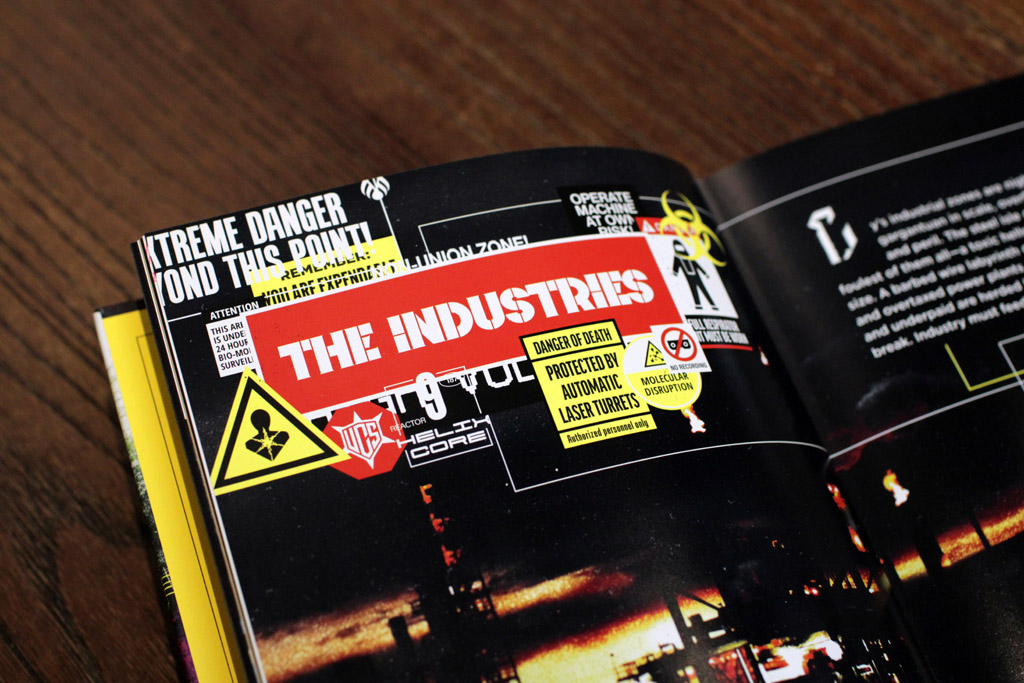
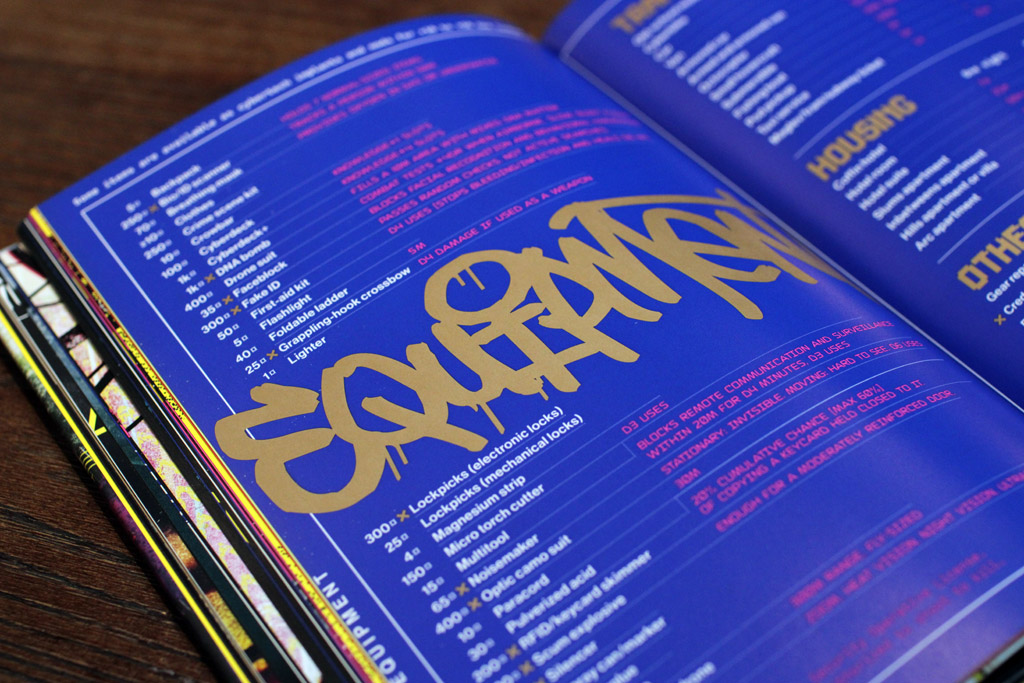
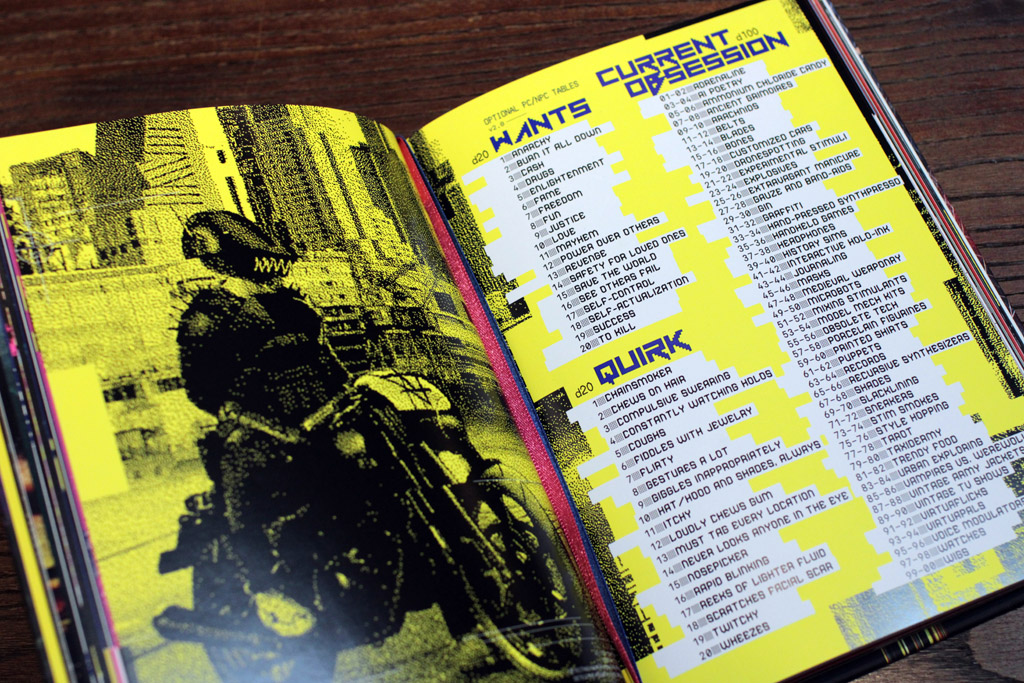
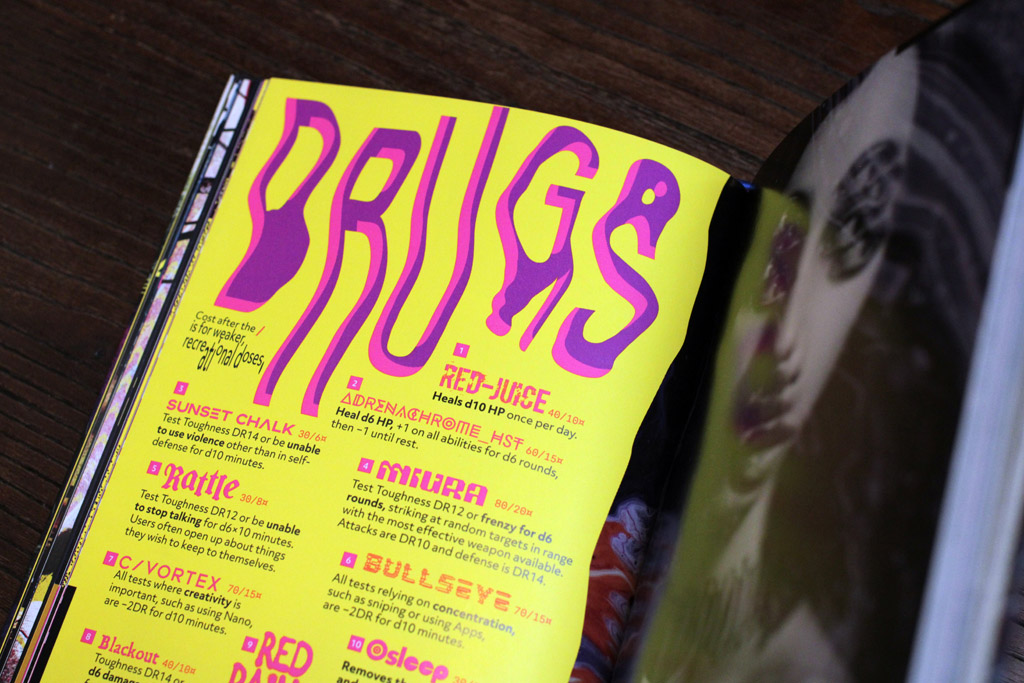
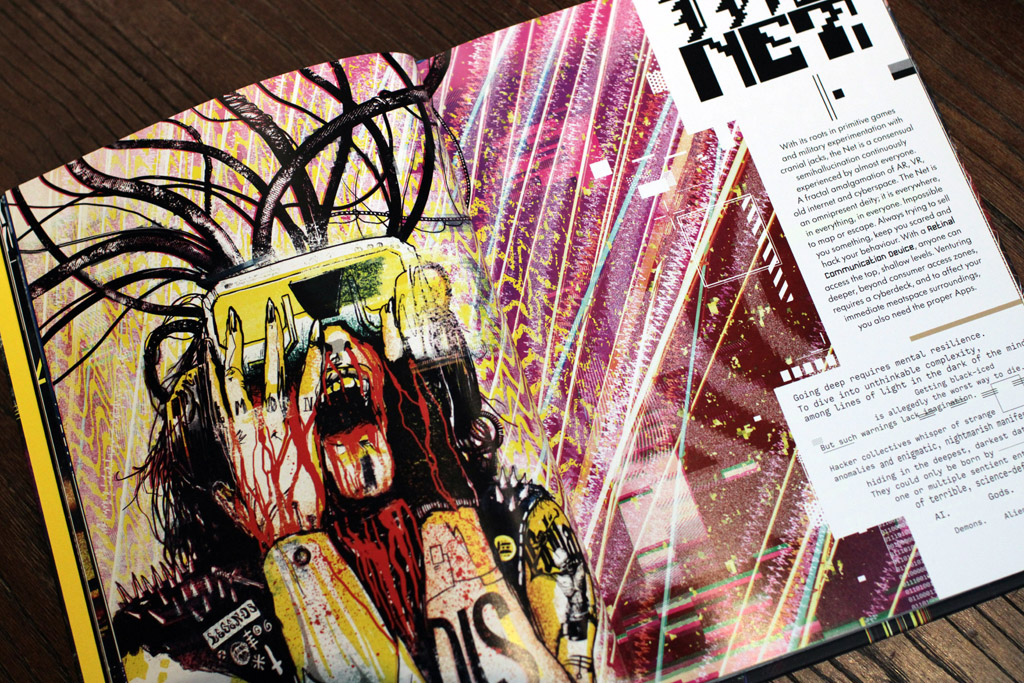
Johan Nohr’s graphic design is the game’s primary engine of atmosphere. The pages are a sensory overload of fluorescent pinks, jagged typography, and ink-smeared industrial sketches. It is a visual language that mimics the frantic, fragmented information flow of a corporate-controlled net.
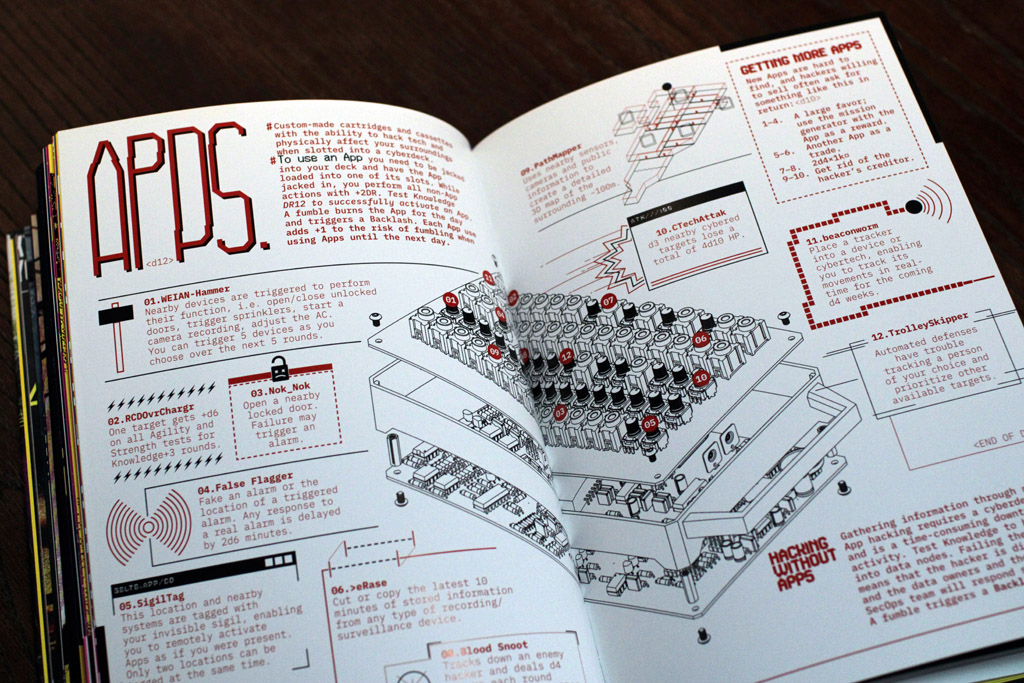
This layout serves a functional purpose, operating on the principle of information density. Information is delivered in “bursts”—tables, lists, and jagged diagrams designed to be read during the kinetic chaos of a live session. It is a book that demands to be used, not merely read.
The Mechanics of the Cybernetic Misfit
The gameplay is “player-facing,” meaning the burden of every violent encounter and desperate hack rests on the players’ dice. Using a streamlined set of five abilities—Agility, Knowledge, Presence, Strength, and Toughness—the system facilitates a style of play where death is frequent and victory is always pyrrhic.
Character creation takes place in minutes, often defined by crippling debt and illegal augmentations. Players choose from six specialized classes, such as the Shunned Nanomancer, a conduit for sentient, intercellular nanobots, or the Burned Hacker, an infiltrator surviving on the dark fringes of the Net.
The CY_BORG Asset Pack and Table Utility
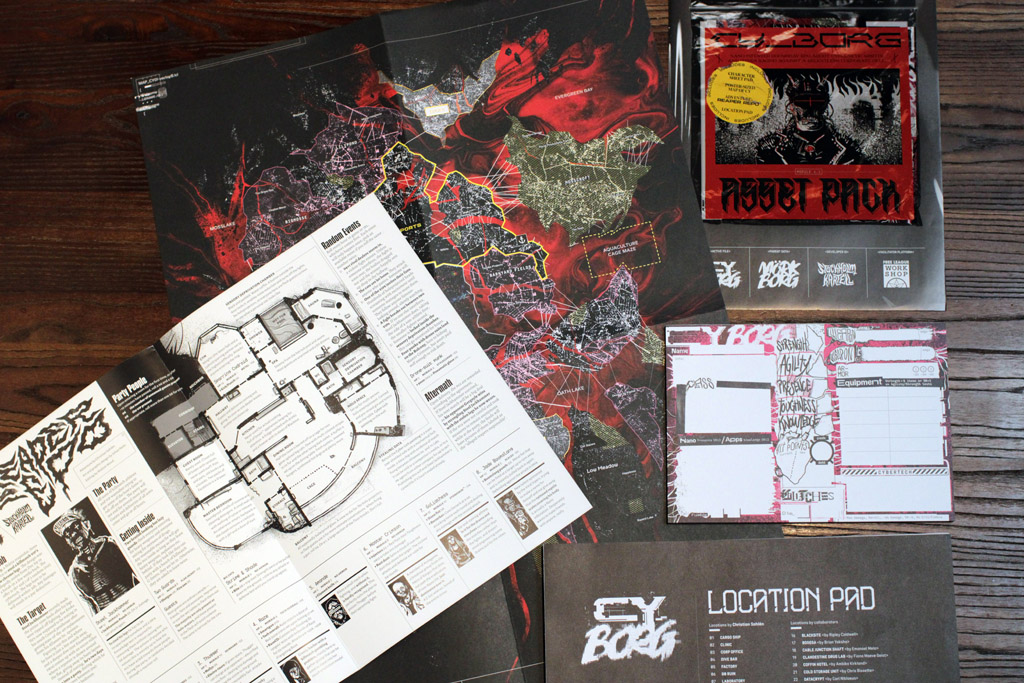
The CY_BORG Asset Pack serves as the system’s primary concession to table usability, providing a physical toolkit for the Referee. Rather than an encyclopedia of lore, it contains:
The Mission Pack Pad: A collection of 34 distinct one-page locations and the Reaper Repo adventure, featuring high-contrast maps and hooks that can be integrated into a city-crawl with zero prior preparation.
The City Map: A large-scale high-resolution map of Cy for tracking urban movements and faction territory.
Reference Cards: A deck of physical cards for equipment and “Miseries,” moving the game’s chaotic tables from the page to the hand for immediate adjudication.
The Moral Bankruptcy of Luck
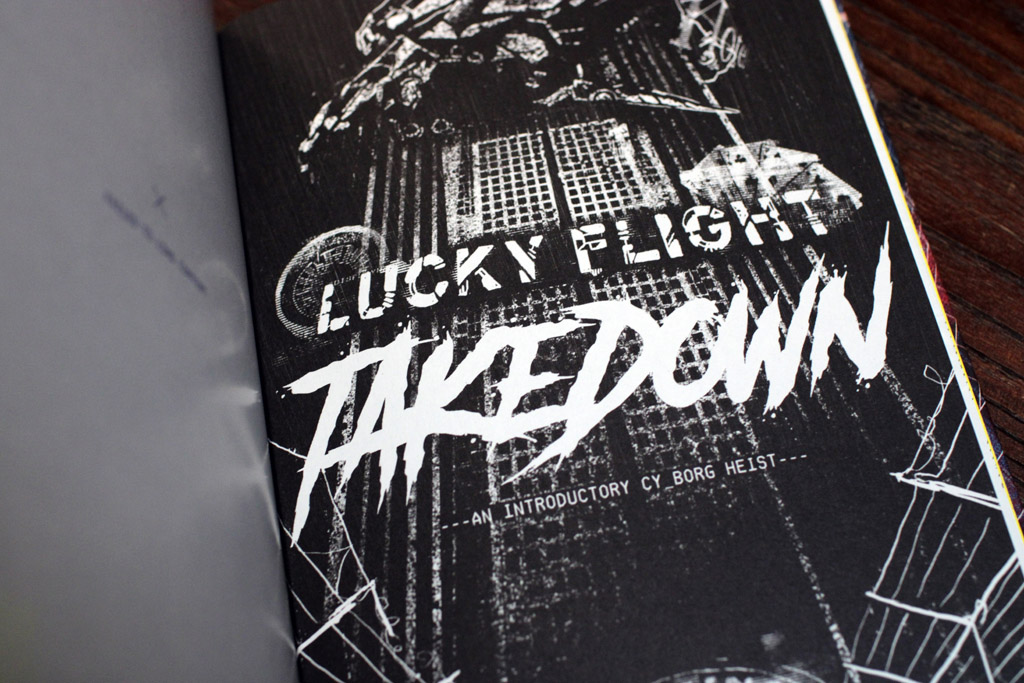
This introductory heist highlights the game’s obsession with the precariousness of life in Cy. Lucky Flight Takedown does not offer the players a clean path. Instead, it provides a messy intersection of corporate greed and human desperation. By forcing the characters into the sterile, high-altitude environment of a sky-casino, the game emphasizes the vast distance between the elite who reside above the smog and the “misfits” who inhabit the gutters. As an introduction, it successfully teaches the referee and players that in this system.
The Ethics of the End
Ultimately, the game functions as an incitement to riot in cyberspace. It forbids loyalty to the corporate system, casting the players as the grit in the gears of a predatory machine. It is a game for those who recognize that if the future is already lost, the only thing left to do is make the collapse spectacular.
Read more about Cy Borg TTRPG at Free League Publishing