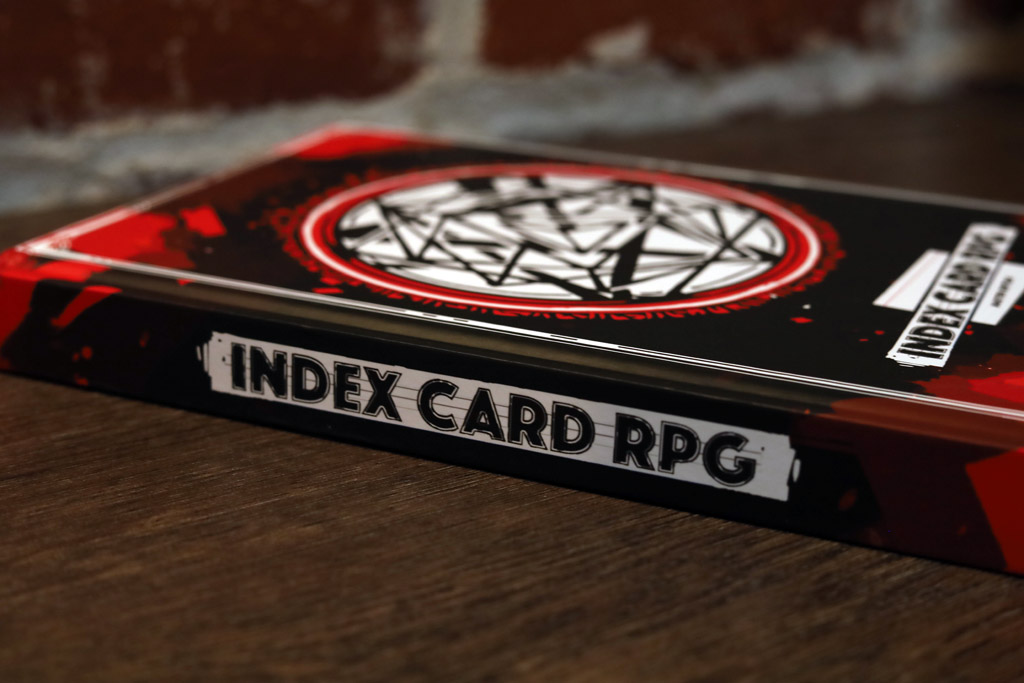
Index Card RPG started as a table habit that turned into a ruleset. Hankerin Ferinale built it around what he already used to run sessions fast. He told one interviewer that he “lived and died by index cards,” using them for notes and even terrain, then wrote a system that “celebrated the cards.”
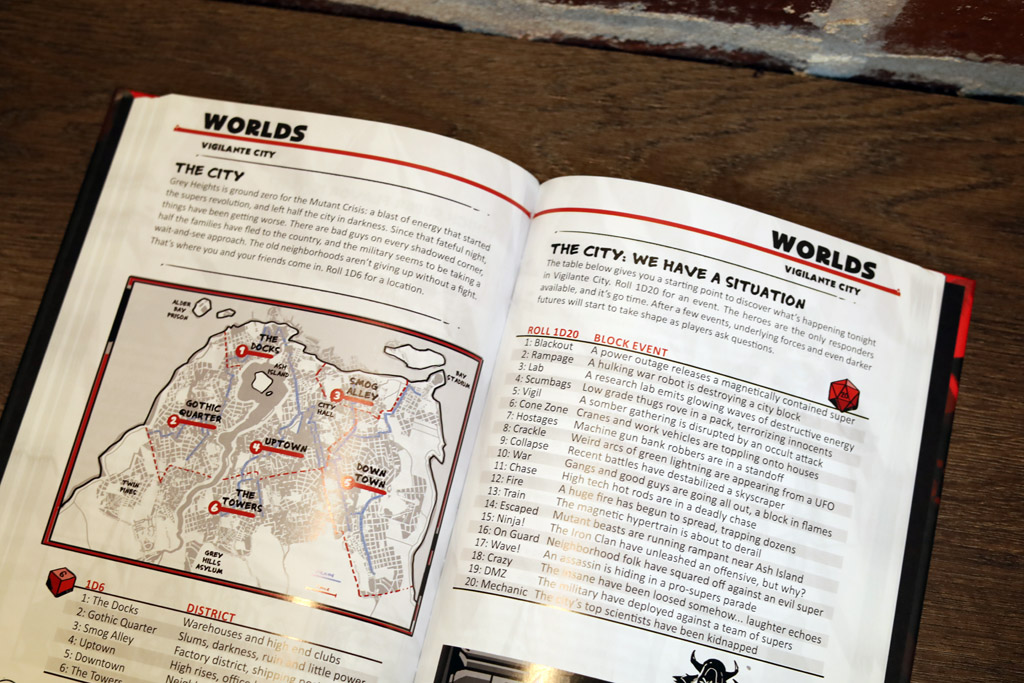
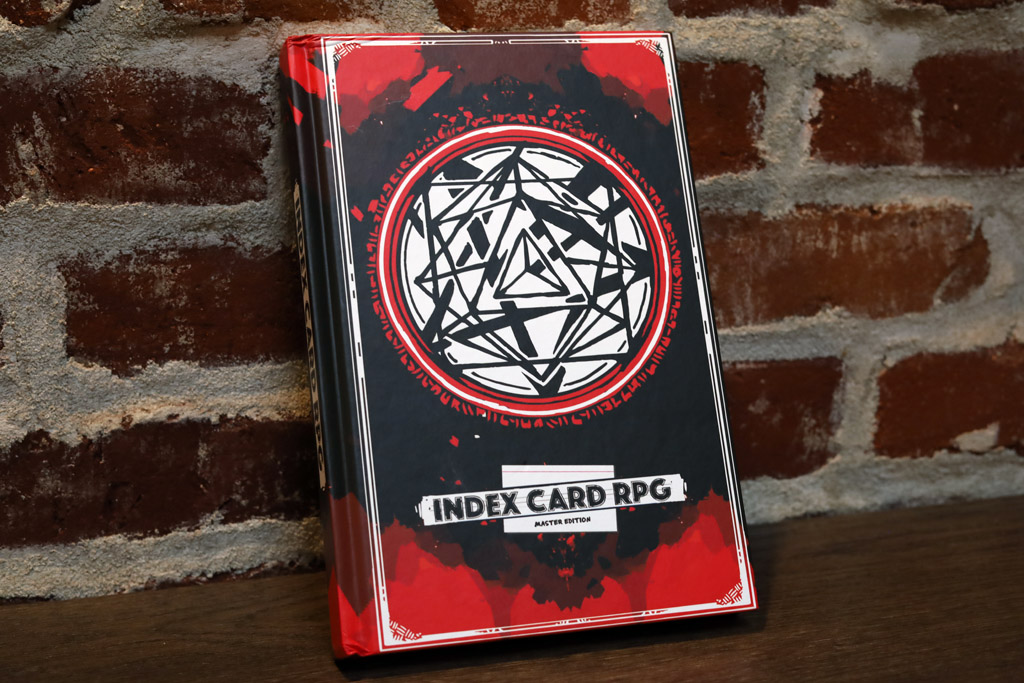
The game first circulated in 2016 as “silly Sharpie drawings,” according to Runehammer Games’ official site. Since then, it has grown into a flagship book, Index Card RPG Master Edition, a 400-page compilation that folds multiple genres and GM tools into one volume. Modiphius Entertainment partnered on a print edition aimed at friendly local game stores, with the company pointing to spring 2022 for retail arrival.
Where the idea came from
Ferinale’s origin story for Index Card RPG sounds like prep work, not product strategy. Around 2011, a group wanted “to try something new,” so he homebrewed rules that matched how he already built locations and encounters on cards. He also framed the project as a practical answer to the weekly pressure of running games, saying he wanted something that “faced the challenges of a for-real weekly GM.”
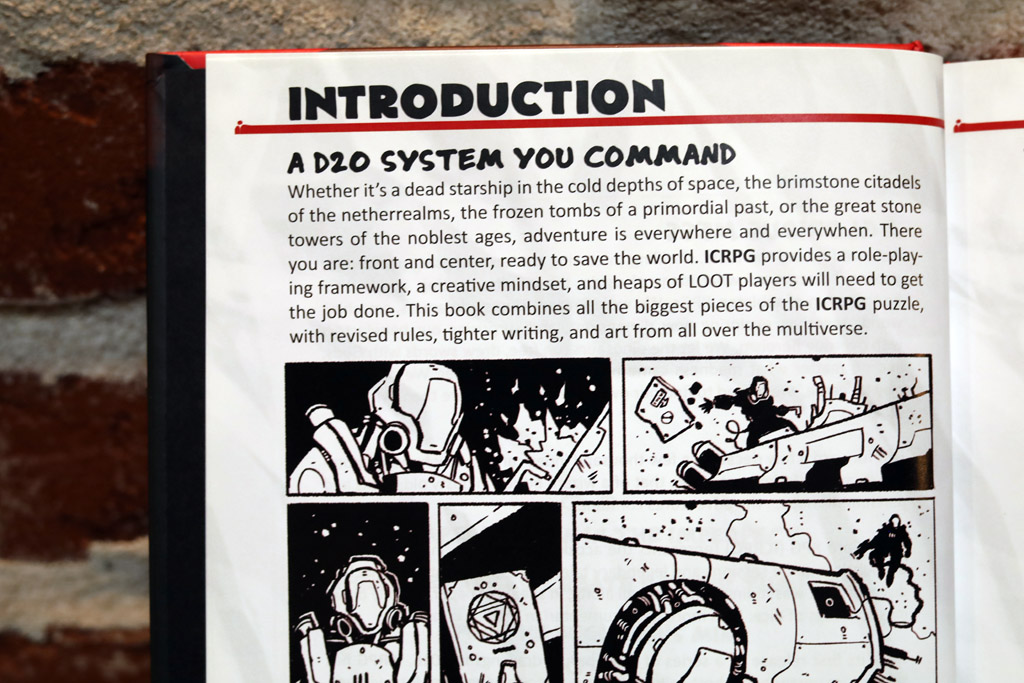
That goal still shows up in the game’s core pitch. Runehammer describes it as a framework and a “creative mindset,” with mechanics that favor quick table calls over long lookups.
What Index Card RPG simplifies
Index Card RPG does not chase realism. It chases momentum. Three design moves do most of the work.
One target number for a whole area
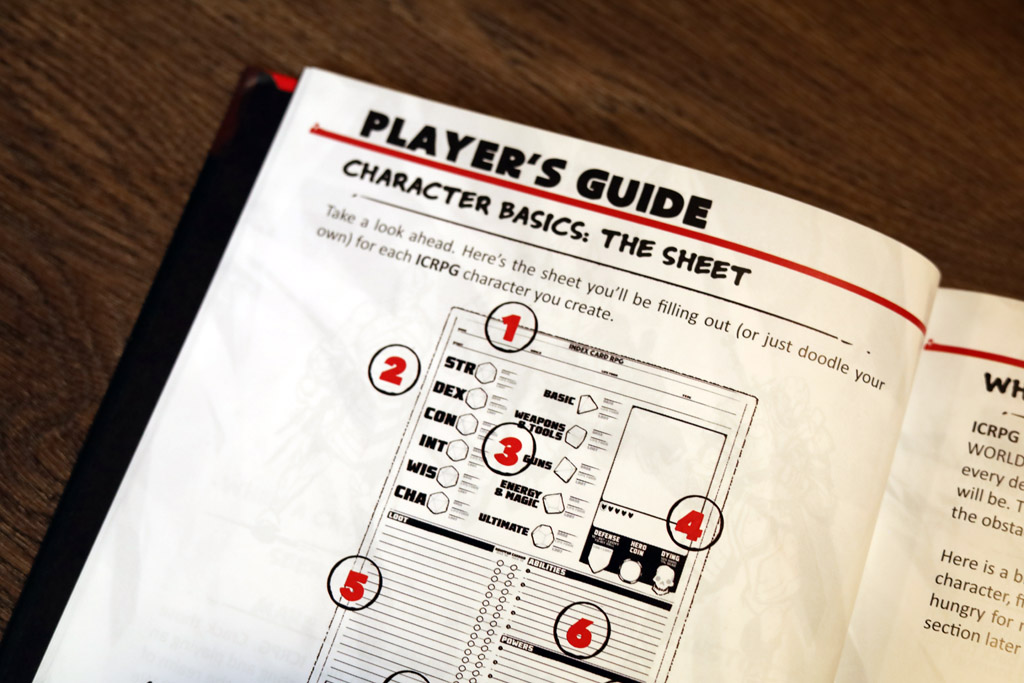
Instead of scattering difficulties across a character sheet, a room, and a monster stat block, Index Card RPG leans on a single target number that applies to the whole area. The reference sheet puts it plainly. “The Target is set for the entire area,” with “10–12” as normal and “16+” as extremely difficult. Runehammer calls this “Targets,” and sells it as a speed tool that gives players a clear read on challenge.
Effort turns many problems into “progress”
The game separates “did you pull it off” from “how much did you get done.” A “Check” resolves as pass/fail. An “Attempt” clears the target, then rolls Effort. The same reference sheet defines Effort as progress and equates a “Heart” to 10 Effort.
Effort uses different die types by category. The reference sheet lists Basic d4, Weapon d6, Magic/Energy d8, and Ultimate d12, with Ultimate tied to a natural 20 or specific abilities. Runehammer’s own overview describes this as “Effort Dice,” a way to sort rolls into a few buckets.
Clockwise turns and visible time pressure
Runehammer highlights “Playing in Clockwise Turns” as a table-level change that streamlines play. The reference sheet reinforces it with “Turns taken Clockwise,” and even assigns the GM a job each round that includes counting down a timer die.
Ferinale has also written about Index Card RPG as a set of habits that you can carry into other games. In a Runehammer blog post, he lists examples such as playing clockwise, simplifying distance into Close, Near, and Far, and using dice timers.
How a session tends to run
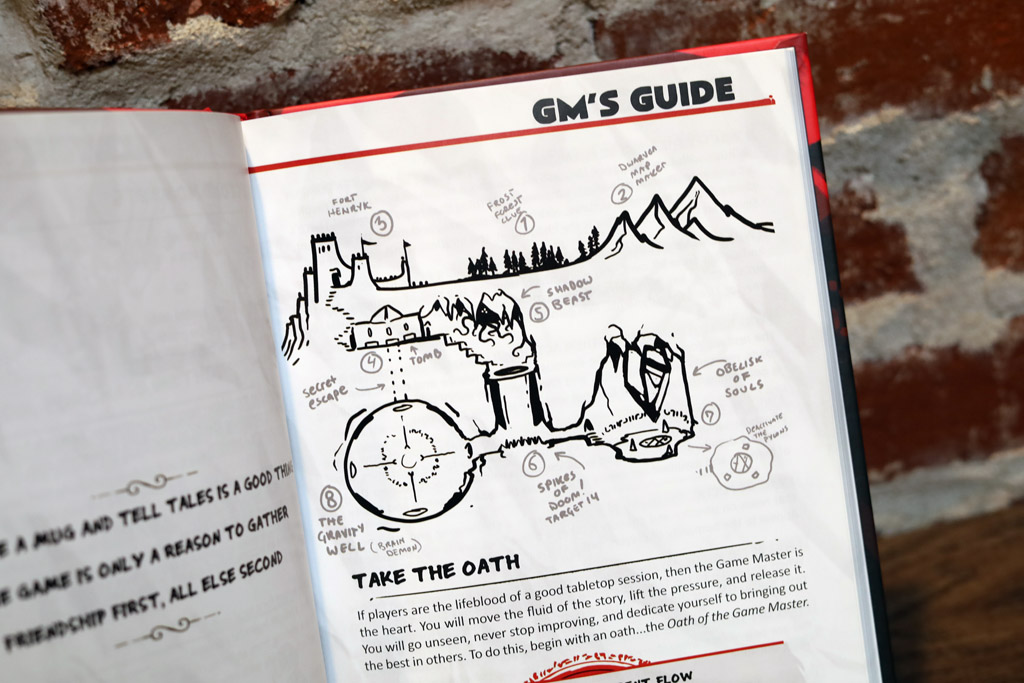
Index Card RPG supports plenty of styles, but the table rhythm often looks like this.
-
The GM frames the area. Put down an index card that shows the room or scene. Set the Target for that area.
-
Players take turns in order. The reference sheet describes options like moving Near plus an action, or moving Far as a full turn.
-
Roll a Check or an Attempt. If the action simply answers “yes or no,” treat it like a Check. If the action needs measurable progress, treat it like an Attempt and roll Effort after success.
-
Keep a timer running when the fiction demands it. The same sheet pushes the mantra “Always have a timer going” and “Make every turn matter.” If you want a physical prop for this, the community site sells a printable timer sheet and explains that timers can operate in any scale from turns to months.
-
Pay out loot and consequences quickly. The reference sheet treats loot as a limited, equip-to-use set of tools and bonuses, which helps the table see what matters right now.
Making your own index cards for play
You can buy official card art. You can also do the original thing and make your own with a Sharpie. Ferinale’s “terrain on index cards” approach gives you the template.
-
The room card: Title, Target number, Three features (hazard, cover, and one interactive object), and a timer hook.
-
The obstacle card: Make a separate card for anything that should take multiple actions to overcome. Doors, rituals, chases, negotiations. Treat it as an Attempt, then track progress with Effort.
-
The threat card: Draw the monster or danger. Add a short note about what it does on its turn. Index Card RPG advice often lives at this “run it now” level.
Hard Suit and the game’s expansion instinct
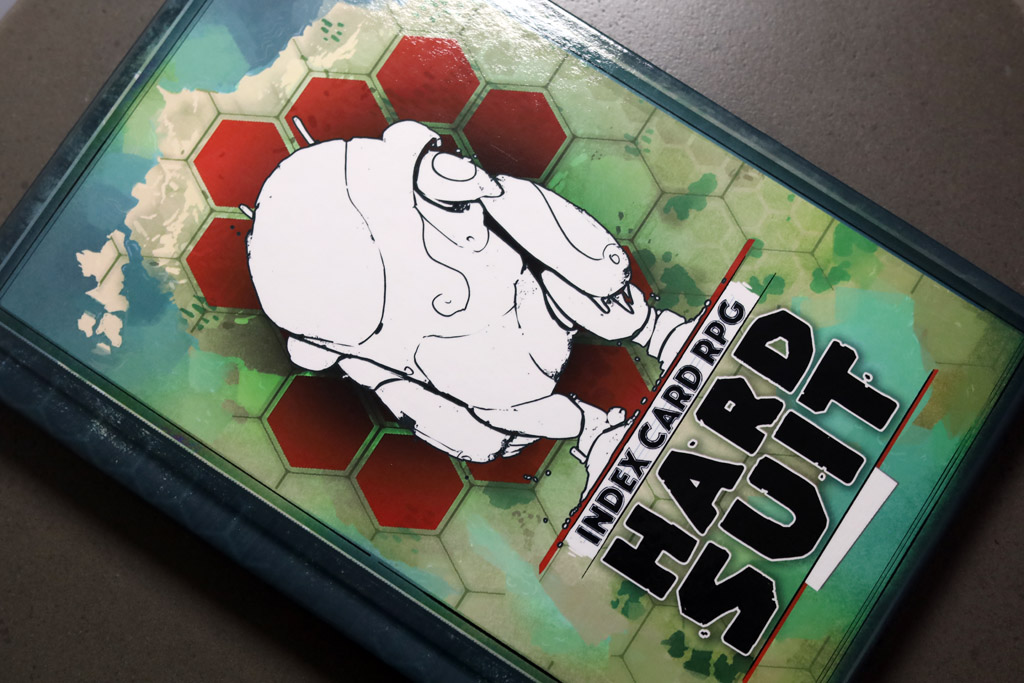
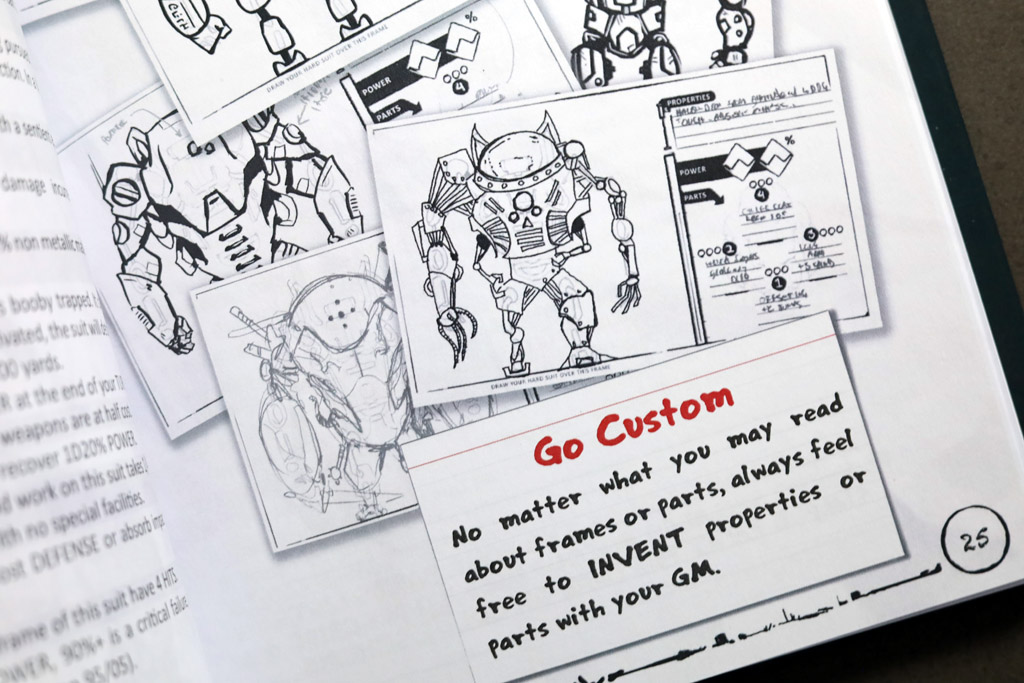
Index Card RPG tends to expand sideways. It adds worlds and toolkits more than it adds sub-systems. ICRPG Hard Suitfits that pattern. Runehammer pitches it as a “world supplement” set on Atria, a wilderness with forbidden technology and bio-mechanical powered armor called hard suits.
The product page promises new rules for building and piloting a hard suit, “Press Play” gameplay that starts before character creation, six hero origins, a crawlable hex map of 20 regions, 20 monsters, and seven “voyages” built around hex-driven play. Listings for the title show a July 10, 2022 release date on marketplaces that carry Runehammer PDFs.
Why it stays fun at the table
Index Card RPG earns its reputation the boring way. It keeps the math in one place, keeps turns moving, and gives the GM permission to show the work. Players look at the Target and understand the stakes. They roll Effort and watch progress pile up. They see the timer tick down and start making choices that feel like choices.
The cards matter, too. A small drawing on a 3×5 card lowers the cost of invention. If a scene flops, you toss the card in a box and pull a different one. If a scene sings, you keep it and run it again, sharper the second time.