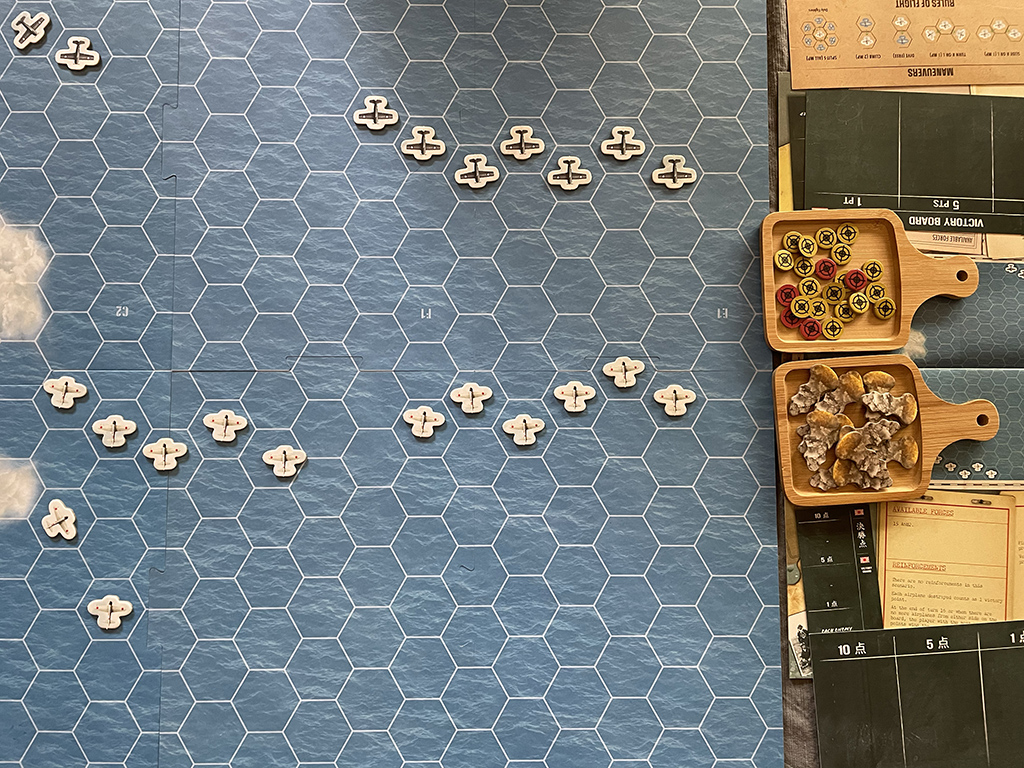
Step into the skies of World War II with Fighters of the Pacific—a high-stakes, strategy‑driven board game that captures the essence of air warfare during one of the most pivotal theaters in modern history. Designed by Didier Dincher and Frank Garibaldi and originally published in 2017 by Ares Games (successfully revived via Kickstarter from Don’t Panic Games), this two‑player experience puts you in command of aircraft carriers, destroyers, and squadrons of iconic WWII fighter planes in a battle of supremacy. The goal: eliminate the enemy fleet or seize their home islands through clever tactics and decisive maneuvering.
Key Strengths
- Pure Strategy, Zero Luck – No dice rolls or random draws. Victory depends solely on tactics.
- Fast, Fluid Gameplay – Quick turns, clear rules, and helpful reference cards keep the pace moving.
- Historical Authenticity – Units and battles are grounded in WWII realities, enhancing immersion.
- Educational Depth – Perfect for classrooms or homeschool settings to teach the Pacific War with interactive simulations.
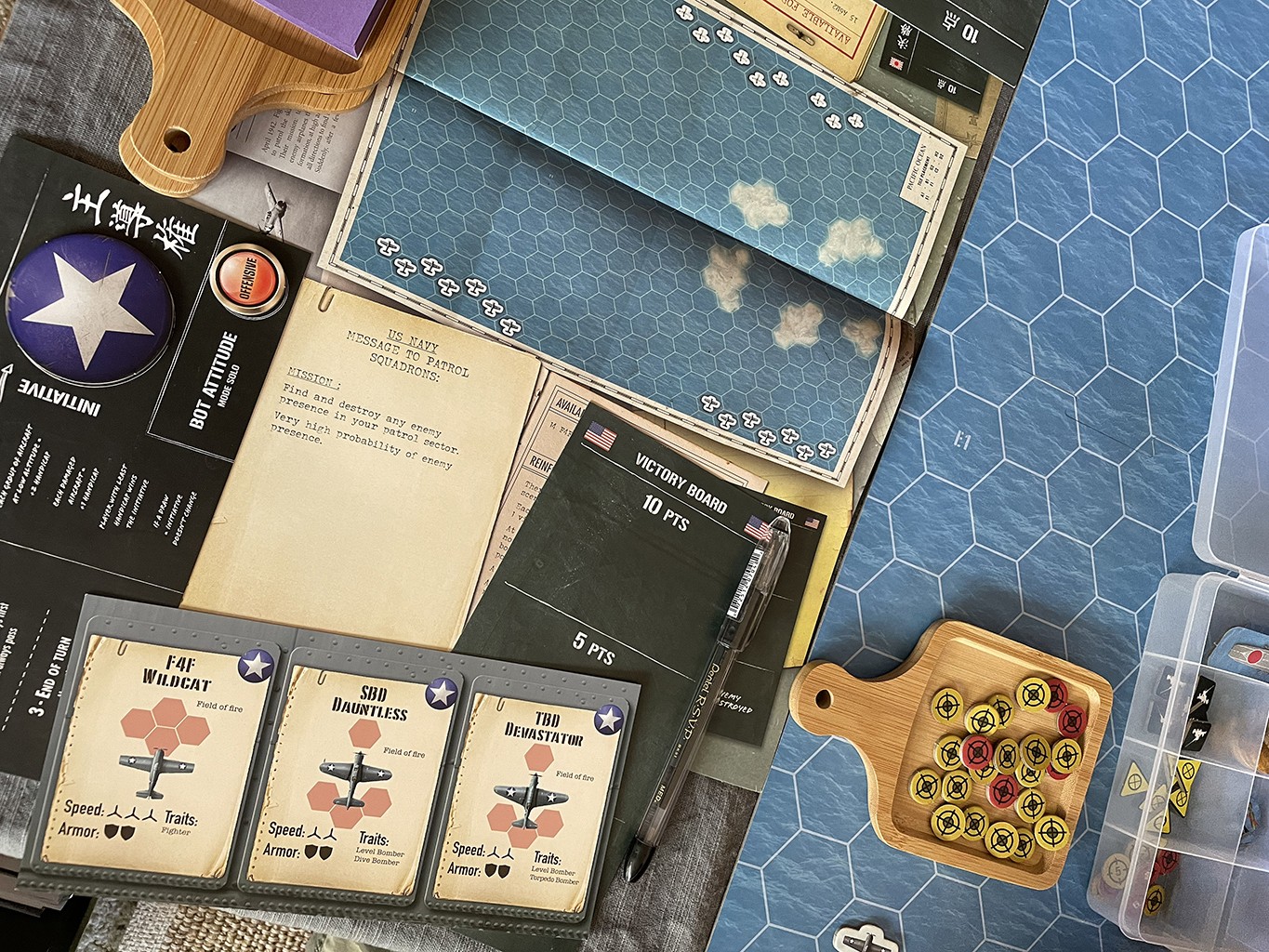
Gameplay Mechanics Overview
Each match in Fighters of the Pacific unfolds in clear, calculated phases:
| Phase | Details |
|---|---|
| Setup | Choose between the U.S. Navy or Imperial Japanese Navy. Select one of ten battle scenarios based on actual WWII events. Each player sets up aircraft carriers, destroyers, and aircraft according to scenario-specific layouts. |
| Initiative | Determine which player moves first (as specified by scenario rules). This sets the rhythm of attack and defense. |
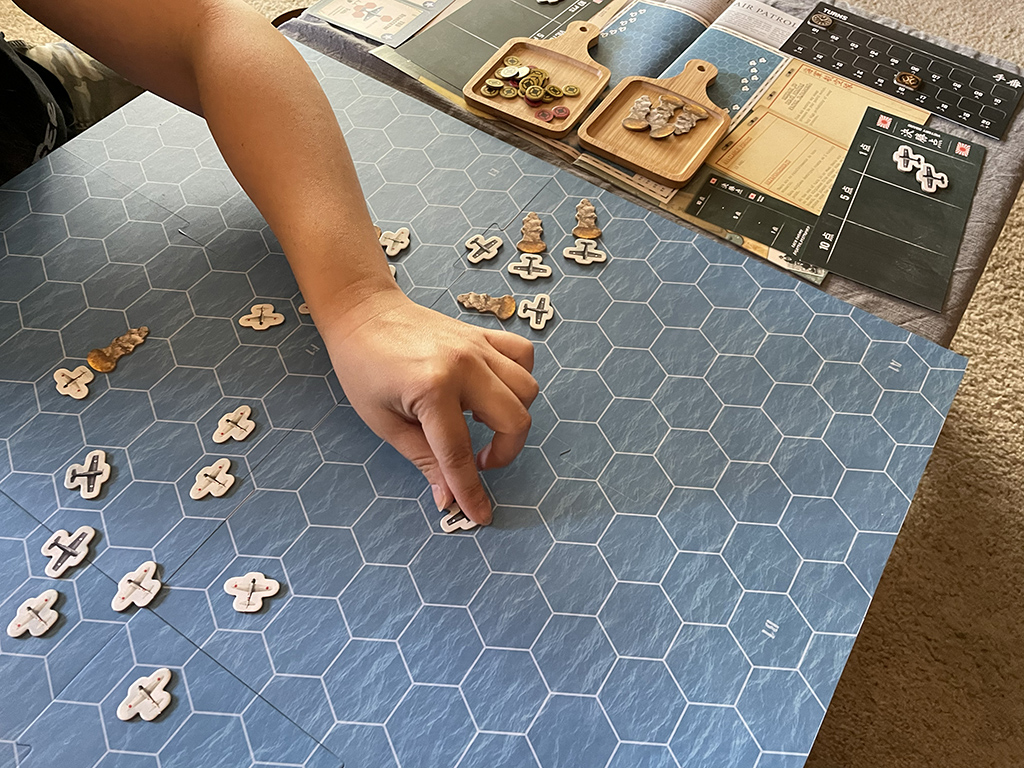
| Movement | Move ships and aircraft on the map. Aircraft manuvers are based on their movement points. Turning is limited to 45° increments, so tight turns require multiple moves. |
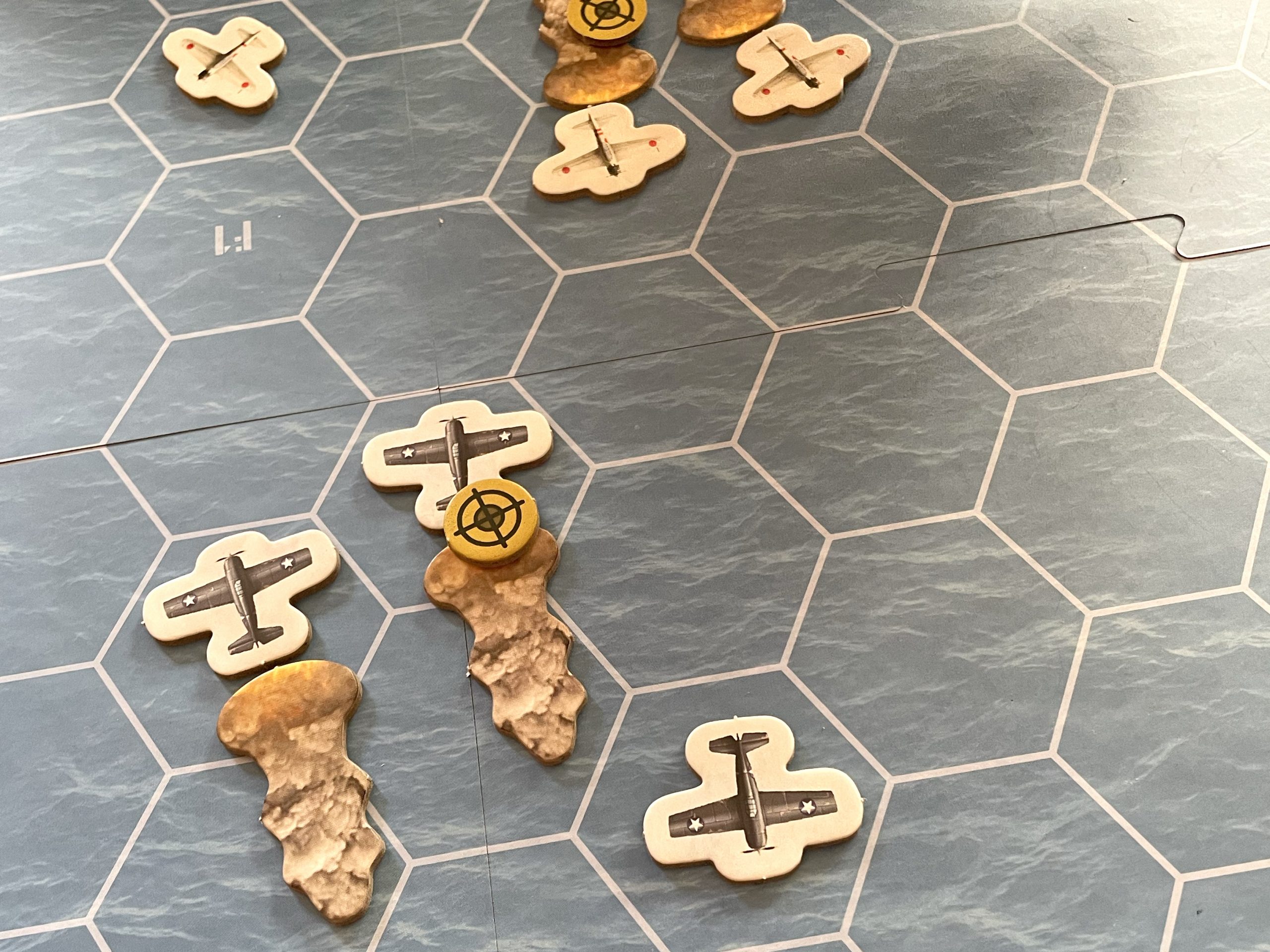
| Altitude Control | Climbing and diving are controlled by flipping double-sided plane tokens. High altitude and low altitude determine combat engagement eligibility. Planes on different altitude levels cannot engage. |
| Combat | No rolling dice! Line-of-sight, arc of attack, and range determine outcomes. Defenders may attempt evasive maneuvers if conditions permit. |
| Victory | Scenarios end when victory conditions are met, often by destroying the enemy fleet or capturing a key territory. |
Flight Mechanics
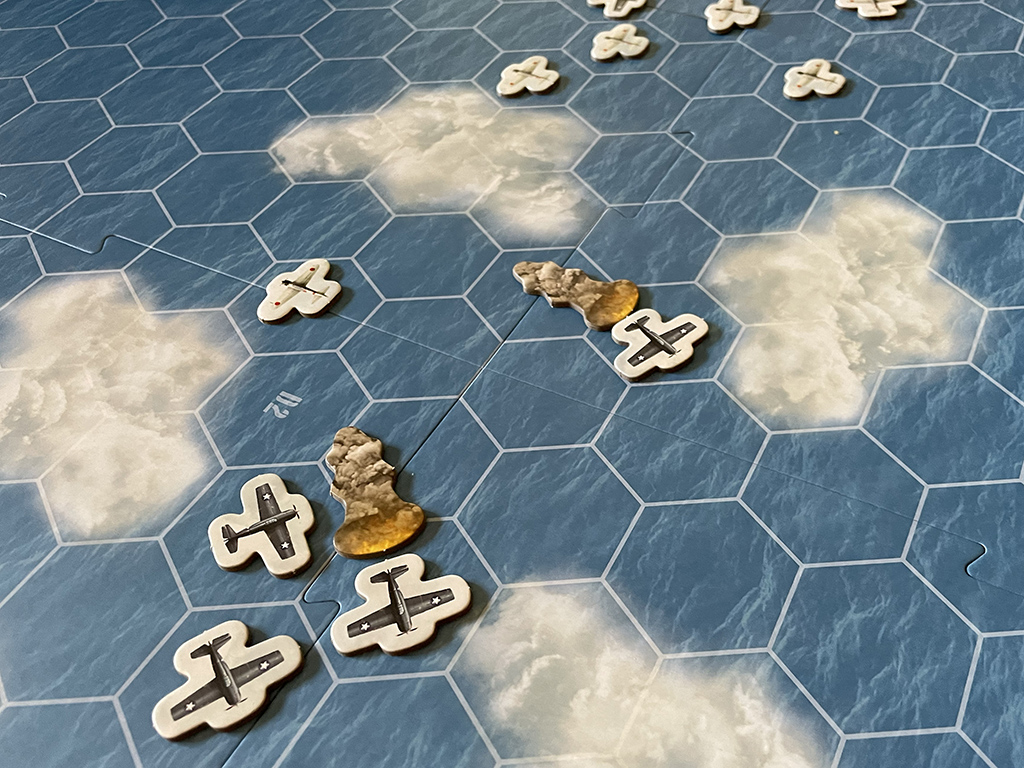
Aircraft in Fighters of the Pacific operate under realistic flight dynamics. Each plane can only turn a maximum of 45° per movement, which mimics real-world aerial limitations—no sudden U-turns here. Executing a full turnaround takes at least three coordinated movements, forcing players to think several steps ahead. This deliberate pace adds tactical tension and elevates strategic planning.
Altitude is represented via double-sided plane tokens:
- Sky/cloud side = High altitude
- Ocean side = Low altitude
Only planes at the same altitude can engage each other. The climb/dive mechanic adds critical depth, simulating three-dimensional combat on a 2D board. As climbing or diving requires a movement phase, flipping the token accordingly brings an extra layer of positioning and engagement complexity to the game.
Winning Tactics
Here are proven strategies to secure victory in the Pacific skies:
- Safeguard Carriers – They are your primary launch pads and high-value targets.
- Gain Air Superiority – Control the skies first to dominate the seas.
- Scout Smartly – Use recon to spot enemy ships early and plan ambushes.
- Exploit Edges – Flanking through edges to trap enemy units without retreat options.
- Play Altitude Tactically – Dive to attack; climb to avoid.
- Keep Your Formation – Grouped planes defend better; isolated units are easy targets.
- Disrupt Enemy Formations – Splitting enemy squadrons or baiting fighters away from their carriers opens windows of attack.
- Plan Ahead – Every move counts. Think several turns in advance. (Simulate the mindset of a WWII commander!)
Chronological Scenario Guide Based on Real Battles
Play ten historical scenarios based on actual battles, or relive the Pacific War chronologically from 1941–1945 in campaign mode. Each battle includes a historically inspired setup and outcome. A valuable educational tool—great for classroom use or family game nights focused on WWII history.
| Scenario | Date | Historical Event | Significance |
|---|---|---|---|
| Bombing | March 1942 | Early island defenses | Post-Pearl Harbor retaliation |
| Combat Air Patrol | April 1942 | Patrol skirmishes over the Pacific | Built momentum for upcoming confrontations |
| Surprise Attack | May 1942 | Battle of the Coral Sea | First aircraft carrier duel; strategic U.S. win |
| Interception | May 1942 | Battle for New Guinea | Japan begins to retreat |
| Face to Face | May 1942 | Loss of USS Lexington | Major U.S. naval setback; tactical win for Japan |
| Attack on the Akagi | June 1942 | Battle of Midway | Allies turning point in the Pacific |
| Vengeance | June 1942 | Midway aftermath | Japan’s retaliation |
| Rescue on the High Seas | June 1942 | Evacuating survivors | Symbol of Japan’s strategic defeat |
| Tokyo Express | August 1942 | Battle of Guadalcanal | Blocked Japan’s resupply efforts |
| Damage Control | September 1942 | USS Enterprise saved | Innovation helped maintain navel strength |
Deeper Dive: Three Key Battles
🔵 Coral Sea (Scenarios 2, 5, 10)
Though Japan sank the USS Lexington, they failed to capture New Guinea—making this a strategic win for the Allies.
🔵 Midway (Scenarios 3, 4, 9)
This was a decisive Allied victory. Four Japanese carriers were sunk, crippling their fleet and reversing the war’s momentum.
🔵 Combat Air Patrol (Scenario 1)
U.S. Navy fighter patrols intercepted enemy raids during early 1942. While no decisive outcomes occurred, these skirmishes tested both sides’ readiness and laid the groundwork for upcoming battles.
Campaign Mode: Strategic Continuity
Unlike standalone scenarios, campaign mode adds persistence:
-
Fleet Health Carries Over – Damage and losses last from one mission to the next.
-
Reinforcement Decisions – Earn new units after victories—or struggle short-handed if you lose.
-
Long-Term Planning Required – Every engagement affects future operations.
This transforms the game into a war of attrition, strategy, and smart recovery.
Aerial Chess with Historical Stakes
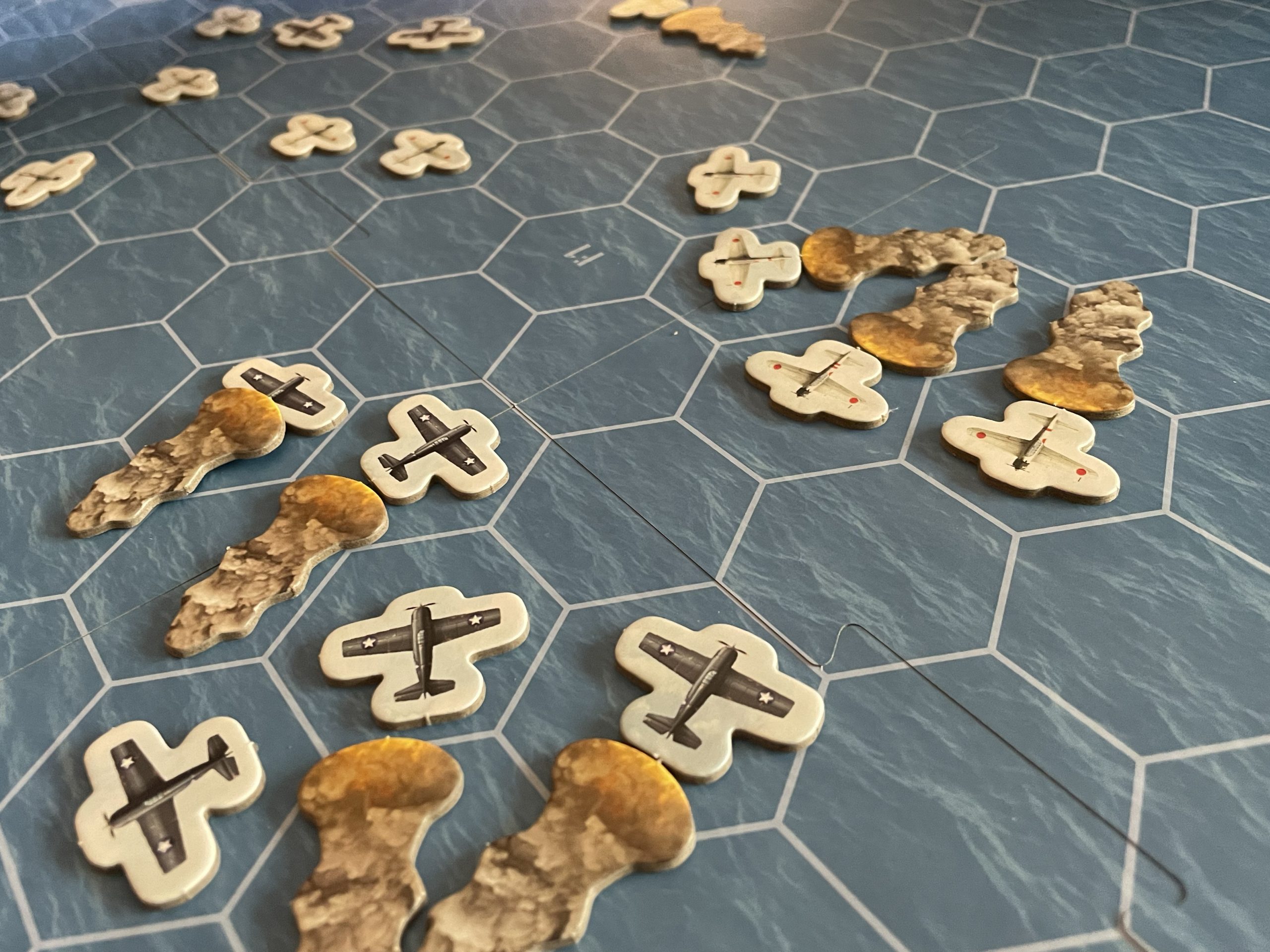
Like a 3D chess game, each unit plays a role—Wildcats and Zeros function like pawns, destroyers resemble rooks. There’s no random chance; it’s your brain versus your opponent’s, step for calculated step.
-
Tactical sacrifices? Necessary.
-
Positional advantage? Critical.
-
Long-term planning? Absolutely essential.
Perfect for Learning & Play
Fighters of the Pacific is an outstanding educational tool. Teachers, homeschoolers, and history buffs can use it to:
-
Reinforce lessons on WWII strategies and timelines.
-
Explain air-naval mechanics and military technology.
-
Explore leadership decisions and their consequences.
The game isn’t just fun—it’s a living history lesson.
Fighters of the Pacific blends tight, tactical gameplay with immersive historical context. Its strategic purity—free of dice and randomness—makes it deeply satisfying. Whether you’re a board game strategist, a WWII history buff, or an educator looking for engaging tools, this game delivers on all fronts.
Play it. Teach it. Relive it. Victory awaits in the skies above the Pacific.
Frequently Asked Questions
Q: Can it be played solo?
A: Yes. The base game includes a solo variant using AI routines.
Q: How long does it take?
A: A single scenario takes about 90–120 minutes. Campaign mode varies by length.
Q: Is it beginner-friendly?
A: Definitely. Reference cards and no-dice rules make it approachable, especially for teens and up.
Q: Are expansions available?
A: Yes! Additional campaigns like Coral Sea and Midway add new units and scenarios.
Q: What’s the recommended age?
A: Age 14+ is ideal. Younger players can enjoy it with supervision.
Q: Is it historically accurate?
A: While abstracted for gameplay, the scenarios, units, and structure follow real historical context very closely.