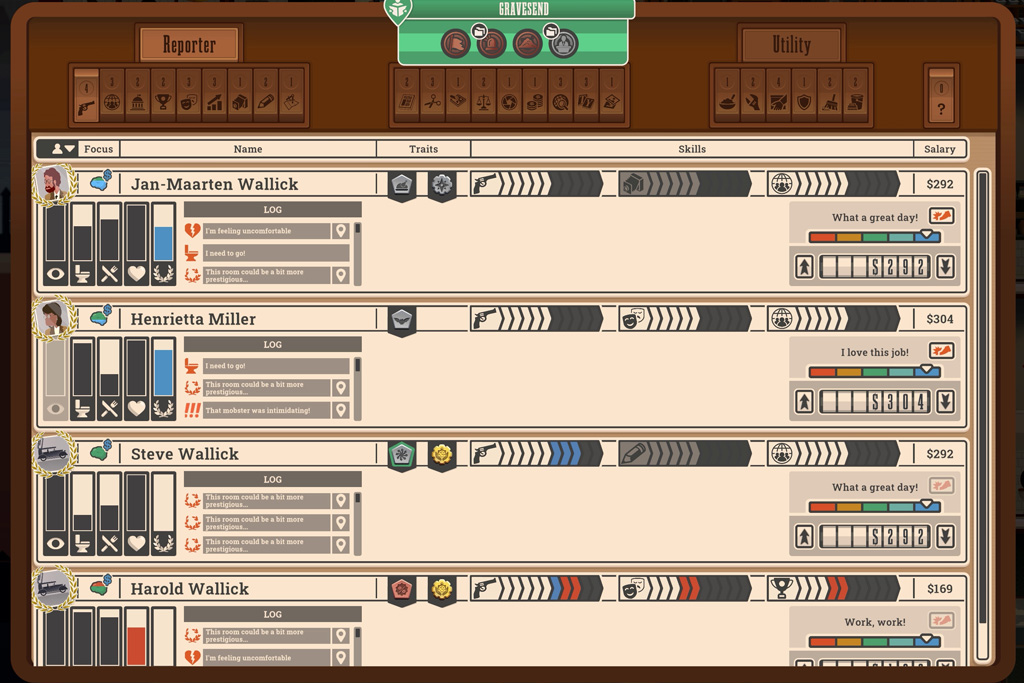
In an era of digital instantaneousness, where the “news cycle” is measured in milliseconds, a small indie studio in Rotterdam has invited players to slow down—specifically to the 1930s. News Tower, developed by Sparrow Night and released out of Steam Early Access into its full version on November 18, 2025, is a meticulously crafted management simulation that asks a deceptively simple question: What does it cost to print the truth?
While many management sims focus on the cold optimization of factories or city grids, News Tower functions as an investigative period piece. It places the player in the role of a fledgling publisher in Depression-era New York City, tasked with turning a inherited, struggling Brooklyn paper into a media empire. But as the ink dries on each weekly edition, players find that the real challenge isn’t just logistics—it’s the moral price of survival.
The Mechanics of the Sunday Deadline
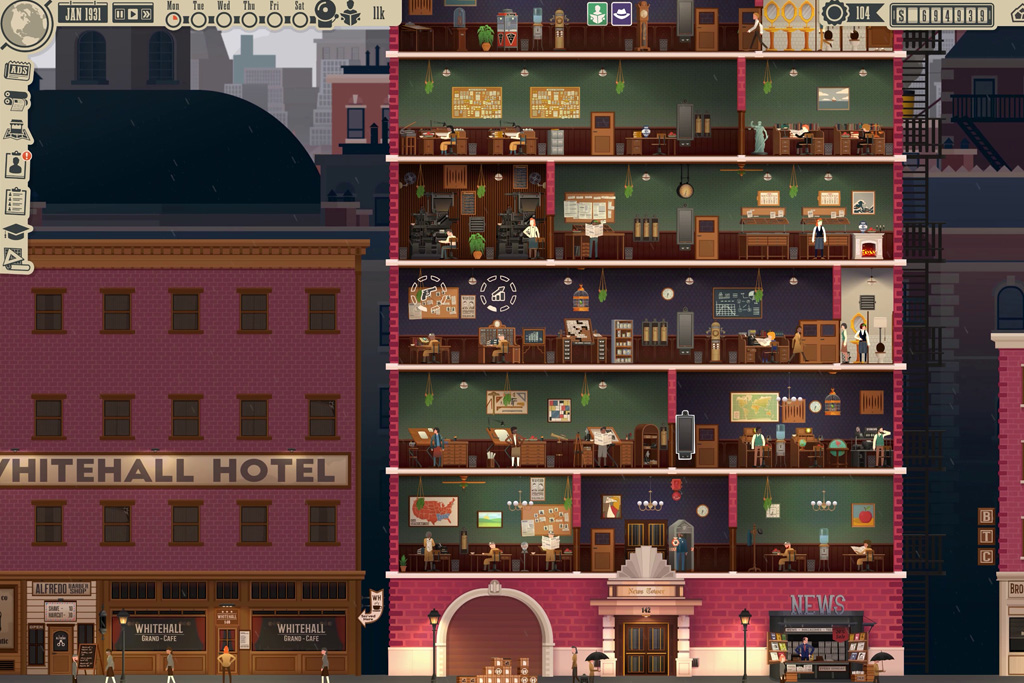
Gameplay in News Tower operates on a high-stakes weekly loop. Every Sunday is “Print Day,” a looming deadline that dictates the rhythm of the entire week. As the publisher, you are responsible for the “News Tower” itself—a physical building you construct and optimize floor by floor.
-
Story Gathering: You dispatch a fleet of specialized reporters (covering genres like Crime, Politics, Society, and Sport) across a map of New York and the globe.
-
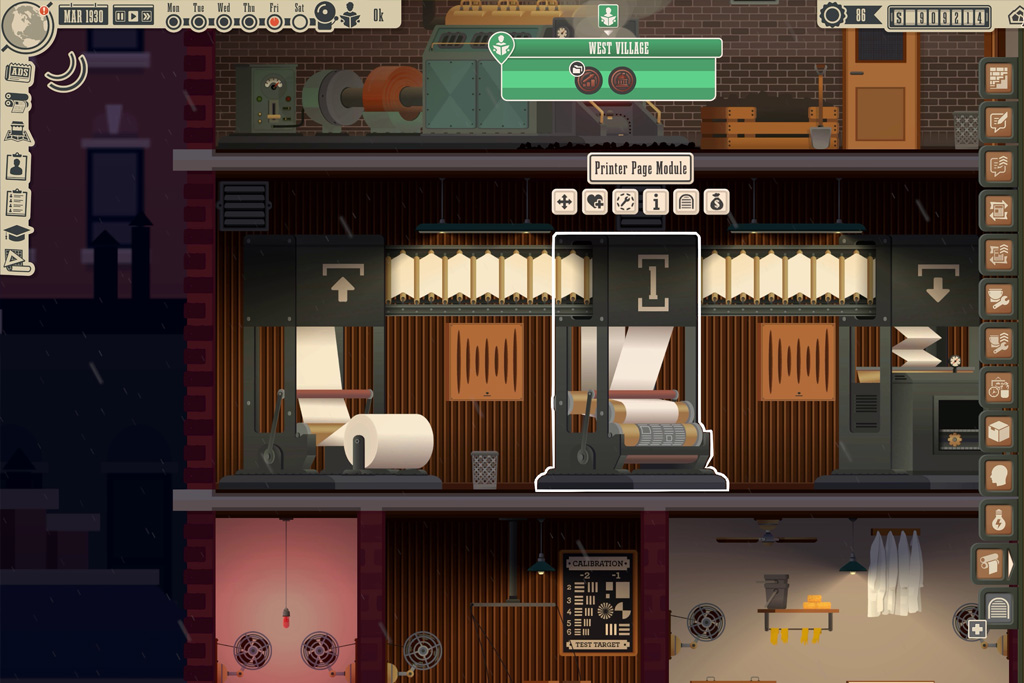
The Production Chain: Raw reports must be physically moved through the tower. Information flows from the telegraph station to the reporter’s desk, then to the typesetters, through the assembly line, and finally to the massive, noisy printing presses.
-
Tower Optimization: Layout is critical. You must balance efficiency against employee well-being. Printing presses are loud and hot; placing them too close to your writers will tank their morale. As the tower grows, you implement pneumatic tubes for speed and elevators to ferry staff between the bustling floors.
The Ethics of “Yellow Journalism”
The most striking investigative element of News Tower is its “Perception System.” The game does not exist in a vacuum; it is set during Prohibition and the Great Depression, a time of rampant “yellow journalism.”
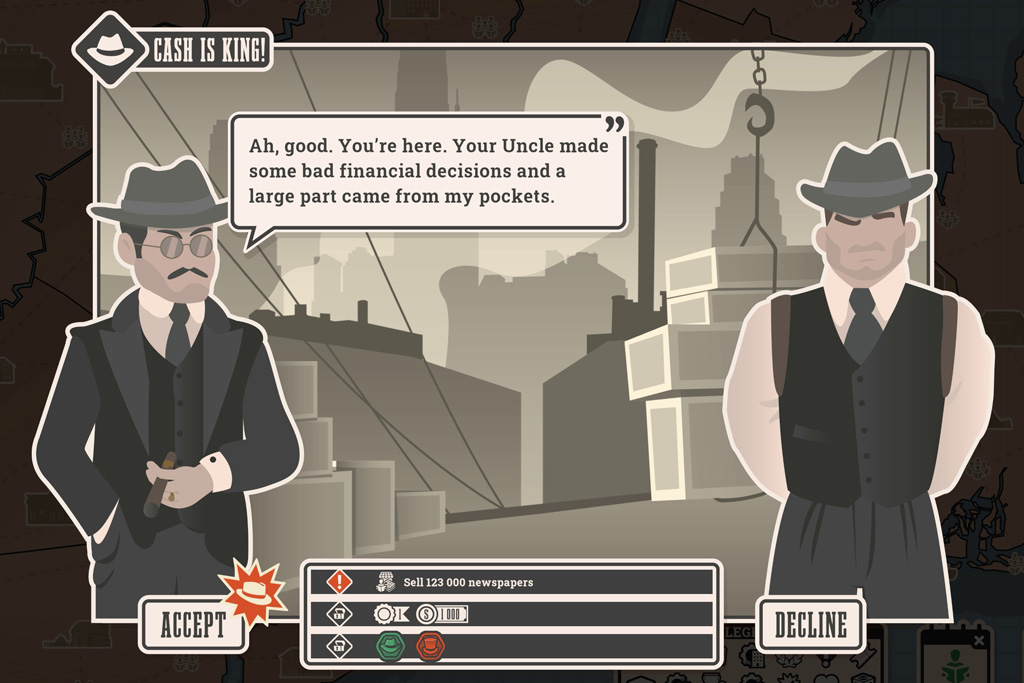
Players are constantly approached by factions—the Mafia, the Mayor, High Society, and the Military. These groups offer lucrative rewards or “influence points” in exchange for favorable coverage or the suppression of scandals. “You’ll have to play ball with at least a couple of these factions in order to succeed,” noted one critic during the game’s launch.
The game forces a confrontation with the brutal economics of the era. Publishing a sensationalist, pro-Mafia lie might grant you the $500 needed to fix a broken boiler, while a factual, ethical report might lead to a “talking-to” from a mobster that leaves your staff too terrified to work. Nachtegeller explains that the goal was to show that “the path to true morality isn’t found in following a set of rules, but in the painful process of thinking for oneself.”
A Mirror to the Modern Era
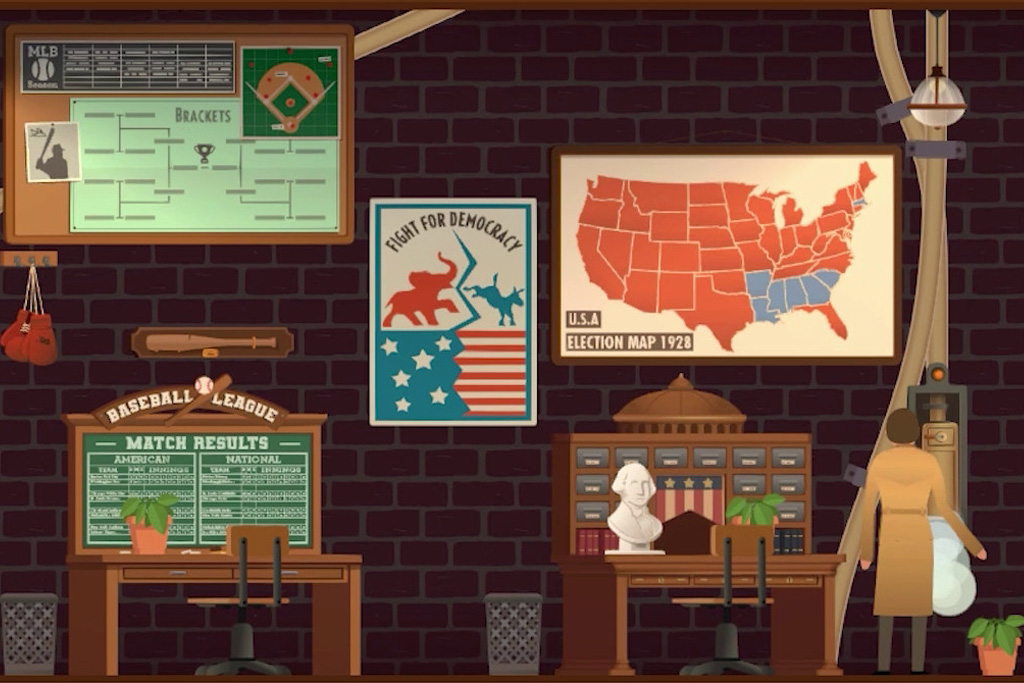
While the setting is historical, the motivations behind News Tower are deeply contemporary. The developers were inspired by the rise of “Fake News” discourse and the shifting relationship between the press and the public during the 2016 U.S. elections. By placing players in the shoes of a 1930s tycoon, Sparrow Night exposes the financial realities that have always haunted the industry.
“Running one newspaper ethically requires constant financial juggling,” the developers have argued. News Towersucceeds because it refuses to romanticize the profession. It exposes the math behind media consolidation and why, even a century ago, the “truth” was often a luxury that small publishers simply couldn’t afford.
In News Tower, the skyscraper you build is more than just a place of business; it is a monument to the choices you’ve made. Whether that tower stands as a beacon of integrity or a monument to sensationalism is entirely up to the player.
Master the Art of the Assignment
To navigate the frantic world of News Tower, one must master a rigid weekly turn-cycle that mirrors the relentless pressure of a real-world newsroom. The objective is singular: ensure a complete edition is ready for the Sunday midnight deadline. Each week begins with dispatching telegraphers to find leads; once a story is “hooked,” you must assign a reporter with the appropriate skill level and “beat” to investigate. This generates raw reports that must then be physically transported to typesetting desks, through the assembly phase where “text slugs” become articles, and finally to the massive printing presses on the tower’s lower floors.
Efficiency is found in the physical architecture of your tower; players must manage the layout of elevators, pneumatic tubes, and break rooms to minimize travel time while mitigating environmental hazards like the deafening noise and stifling heat of the presses. Failure to manage this production chain means missing the deadline, leaving you with empty pages and a hemorrhaging bank account.

The Perception Pivot: Branding Your Truth
A publisher’s most delicate balancing act is the Perception System, a sliding scale that measures your editorial identity from “Serious” on the left to “Sensational” on the right. This is not just a cosmetic choice; it defines your business model and the unique bonuses you unlock.
Briefly, the system works through “nudges.” Specific articles carry arrows that push your paper’s “perception car” along a track each week. Staying in one lane consistently—rather than oscillating—unlocks powerful tiered rewards. For instance, Informational papers earn massive sales bonuses for “Tag Variety” and international news, whereas Sensational papers profit from “Hot Topics” and a “Paparazzi” bonus for using photographs. Advertisers also respond to this branding; while the Moderate lane is often the “Advertiser’s Favorite” with flat cash bonuses for every ad printed, extremists on either end must rely on high-volume circulation or specific “Risk Buzz” to keep their towers profitable.

The Newsroom Beat: Reporter Tags and Faction Dynamics
The following table serves as a field guide for managing your editorial staff and understanding how their reporting feeds into the city’s power structures.
| News Tag | Focus & Content | Associated Factions | Strategic Value |
| Politics | Elections, legislation, and mayoral scandals. | The Mayor / Wall Street | Essential for securing city-wide influence and better loan terms. |
| Crime | Prohibition busts, gang heists, and “dirt” stories. | The Mafia / Police | High risk, but yields massive influence with the Mob or law enforcement. |
| Economy | Market trends, labor strikes, and industrial growth. | Wall Street / Unions | Crucial for “Informational” papers and securing lower paper costs. |
| Society | High society galas, scandals, and fashion. | High Society / Socialites | Primary drivers for the “Society” and “Entertainment” tags |
| Sport | Local baseball, boxing, and “dirt” on athletes. | Military / General Public | Consistent sales drivers; tied to “World News” and “National Security” |
| Entertainment | Cinema, theatre, and celebrity gossip. | Socialites / International Agencies | Perfect for “Unveiling” tags and building a massive subscriber base. |