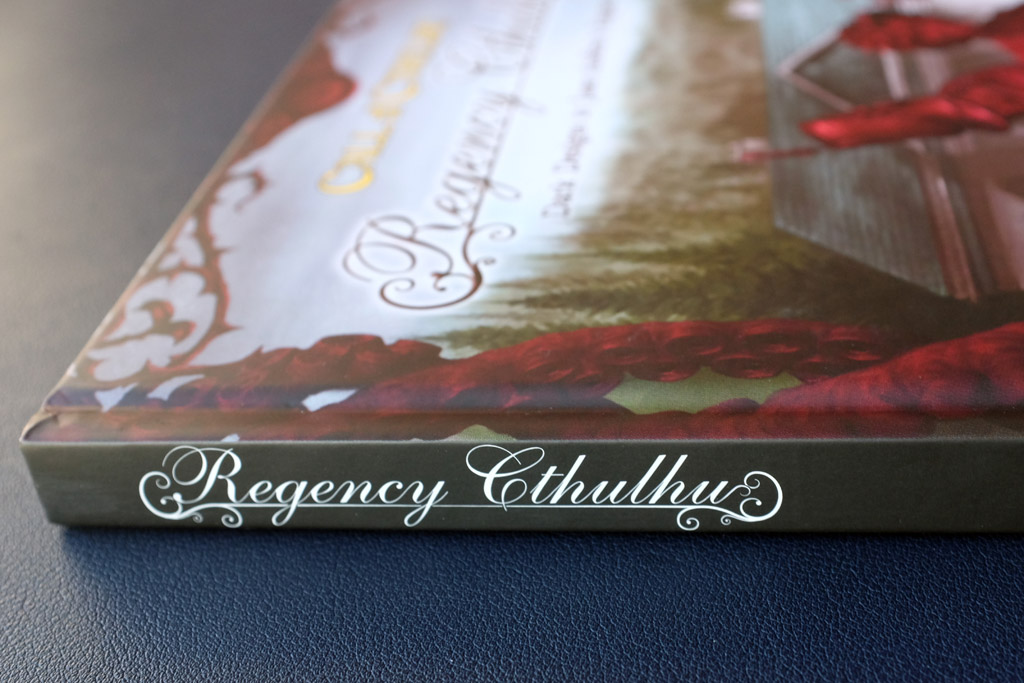
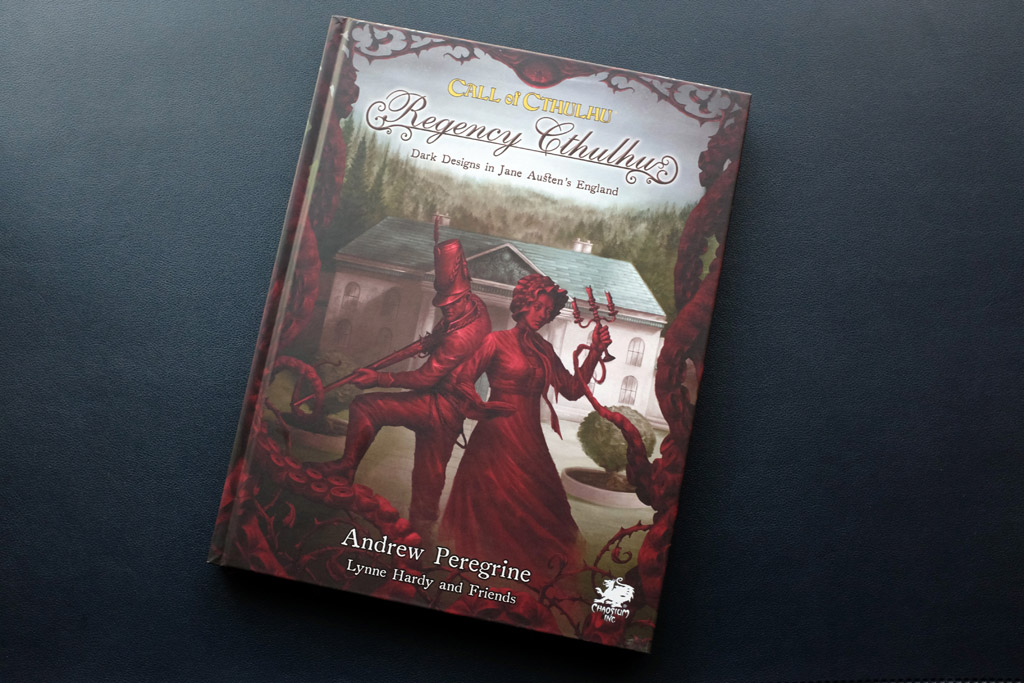
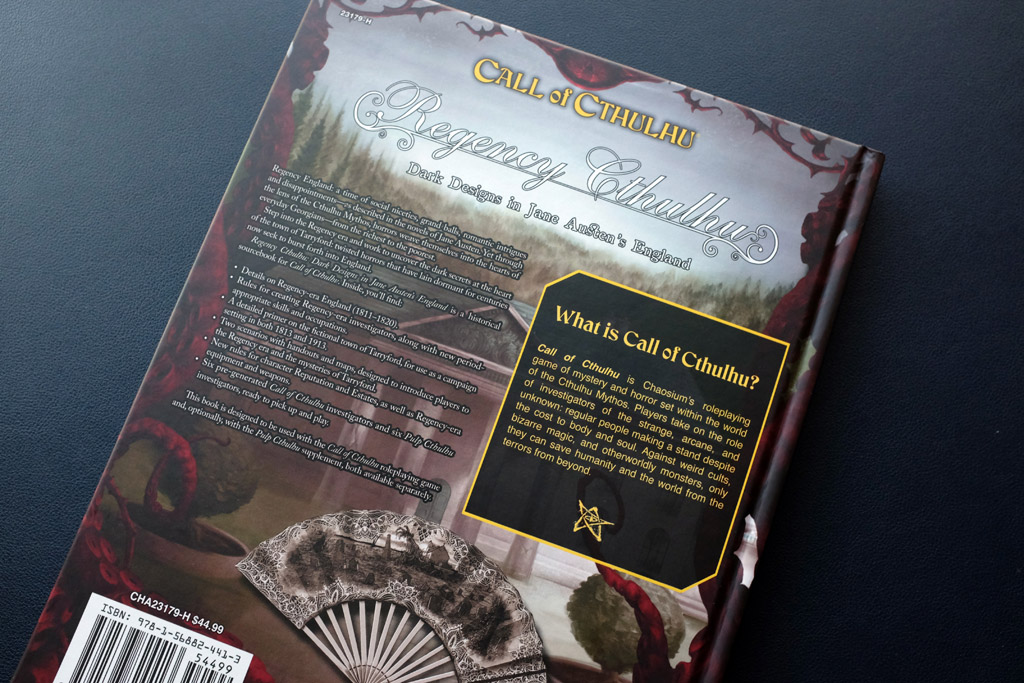
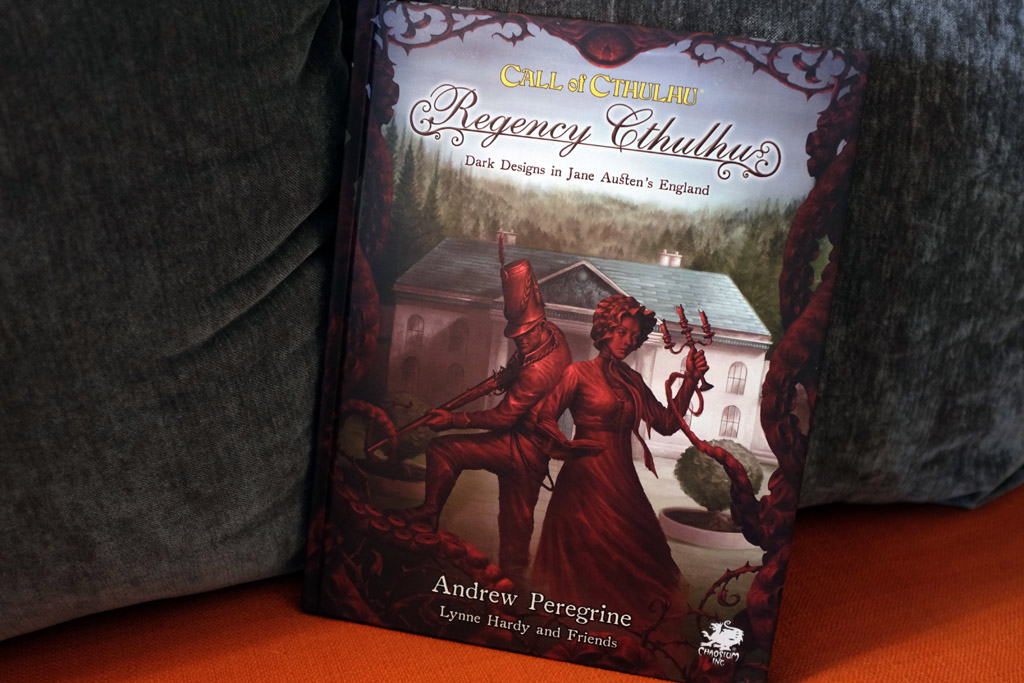
In the rigid social ecosystem of 1813 England, a single misplaced word at a ball can be more socially fatal than a duel at dawn. It is this tension—the juxtaposition of polite society against the primal, cosmic indifference of the Great Old Ones—that forms the backbone of Regency Cthulhu: Dark Designs in Jane Austen’s England. Published by Chaosium Inc. and authored by Andrew Peregrine and Lynne Hardy, this 224-page hardcover sourcebook is not just a costume change for your Call of Cthulhu sessions; instead, it is a recalibration of how horror is experienced at the gaming table.
The Architect of Propriety and Panic
For Andrew Peregrine, the book’s lead writer, the project was a “dream come true,” born from a long-standing fascination with the era’s unique contradictions. During the book’s unveiling, Peregrine noted that the Regency era provides a “perfect pressure cooker” for investigative horror. “The Regency is also a time of lurid Gothic romances, and of war and social upheaval,” Peregrine explained in interviews, highlighting that the period’s focus on “social niceties and romantic intrigues” provides a fragile mask for the encroaching Industrial Revolution—and, in this setting, the Mythos.
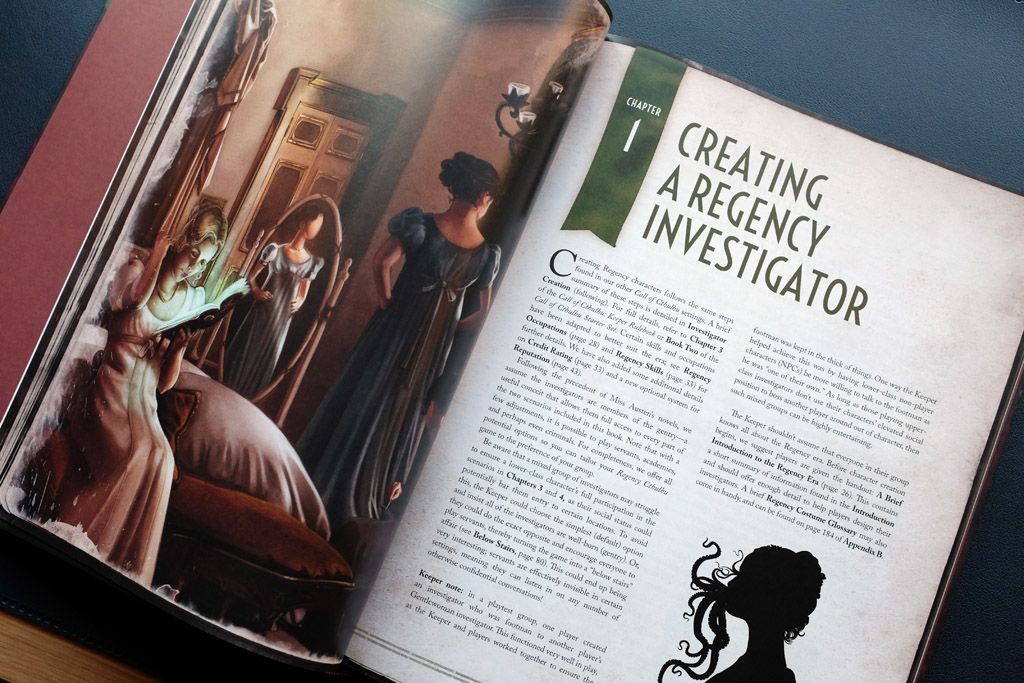
His intention was to move beyond the tropes of the 1920s—the game’s traditional home—to find a period where information is a currency and reputation is the ultimate shield. Unlike the 1920s investigator who might call upon a local library or a private eye, the Regency investigator must navigate the drawing rooms of Wiltshire, where the greatest threat to a mission might not be a shoggoth, but a lack of an invitation to the right dinner party.
A New Currency: The Reputation System
The book’s most significant mechanical contribution to the Call of Cthulhu 7th Edition system is the Reputationstatistic. In a period where “decorum” is a survival trait, Reputation acts as a secondary health bar. It measures a character’s standing in high society and fluctuates based on their public actions.
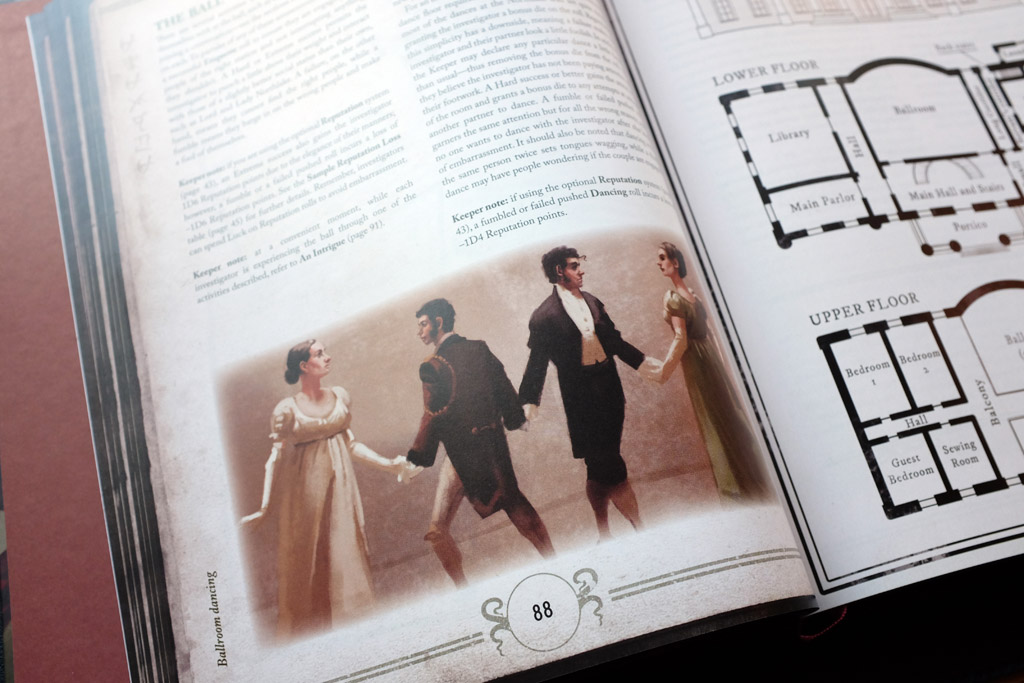
If an investigator is seen outdoors after midnight with an unrelated member of the opposite sex—even if they were preventing a cultist ritual—their Reputation may plummet. This loss carries mechanical weight: a low score imposes “Penalty Dice” on social skills like Persuade or Charm, effectively exiling the player from the very circles they need to investigate. Conversely, a high Reputation can open doors that no lockpick could ever bypass. It forces players to make a harrowing choice: save the world in secret and maintain their status, or save it in public and become a social pariah.
The Tarryford Microcosm
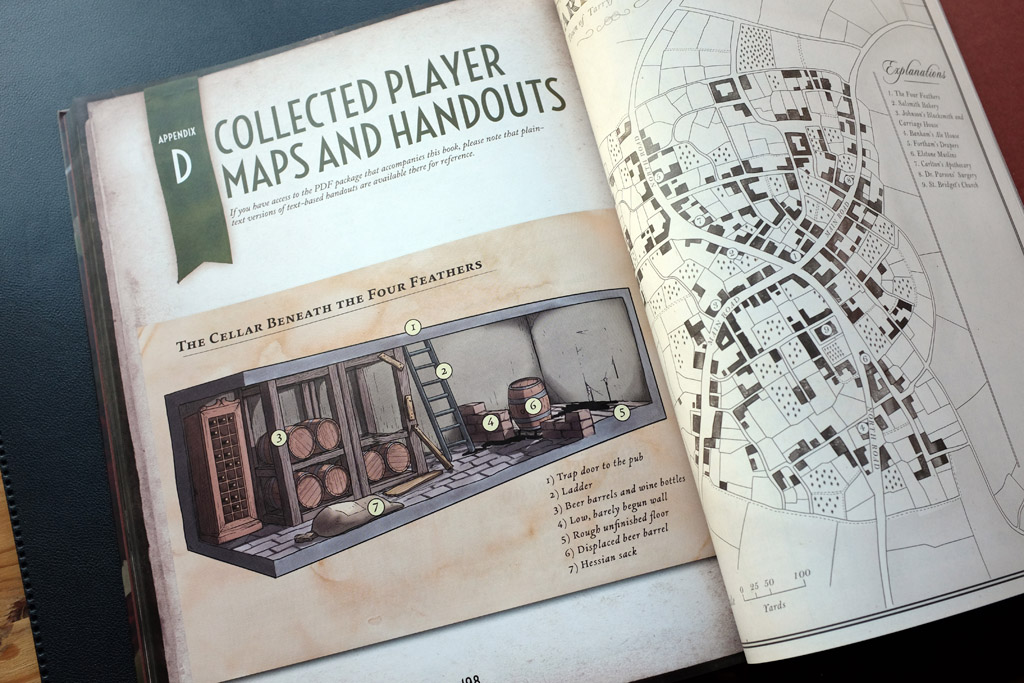
Central to the sourcebook is the fictional town of Tarryford. The book provides a detailed primer on this Wiltshire locale, offering a sandbox for “Keepers” (the game’s term for narrators) to run long-term campaigns. Notably, the book provides details for the town in two distinct eras: the Regency year of 1813 and the classic era of 1913. This allows groups to play “legacy” campaigns, where the actions of a Regency investigator might have chilling repercussions for their descendants a hundred years later.
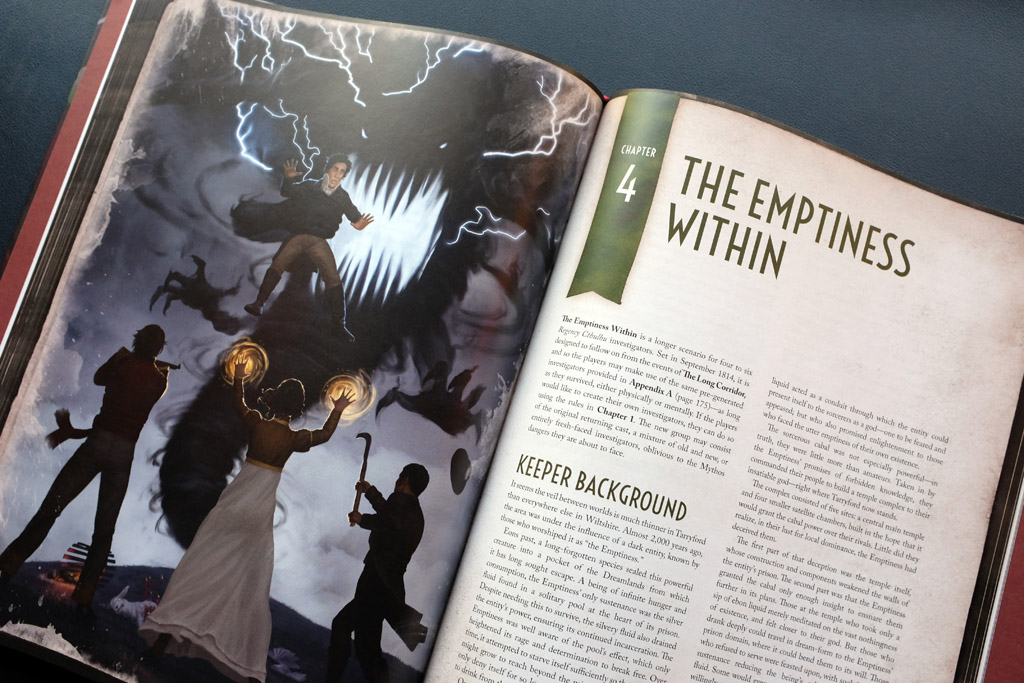
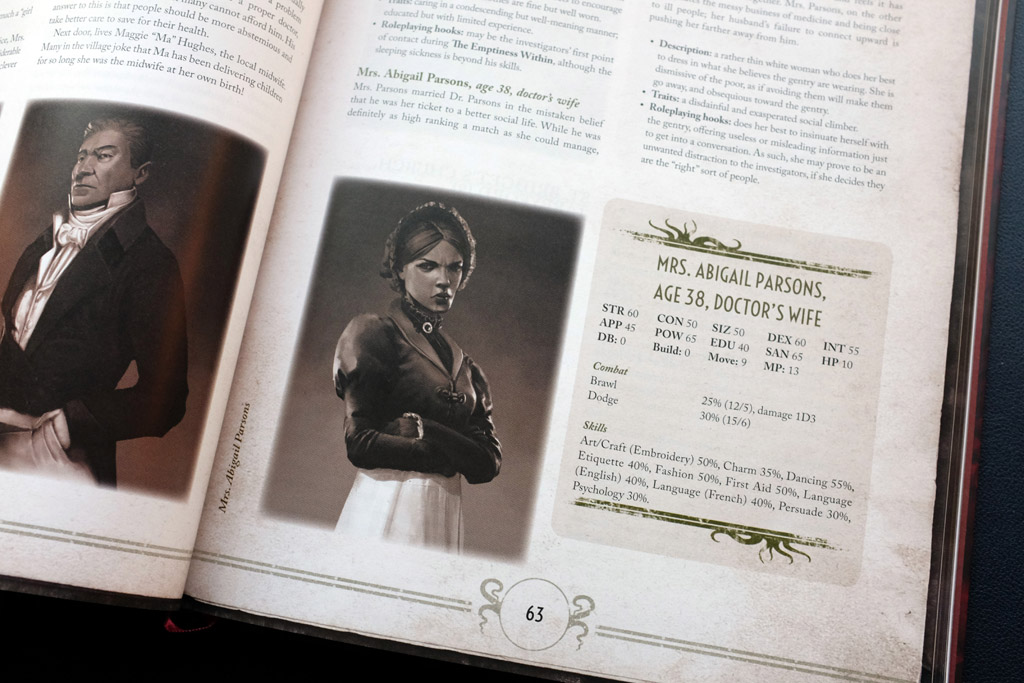
The book includes two introductory scenarios—“The Long Corridor” and “The Emptiness Within”—which serve as a masterclass in blending Austen-esque wit with Lovecraftian dread. In these adventures, “evil” is not always a tentacled monster in a swamp; it is often an ambitious aristocrat or a clergyman whose “dark secrets” lead to “darker consequences.”
The Multi-Faceted Appeal
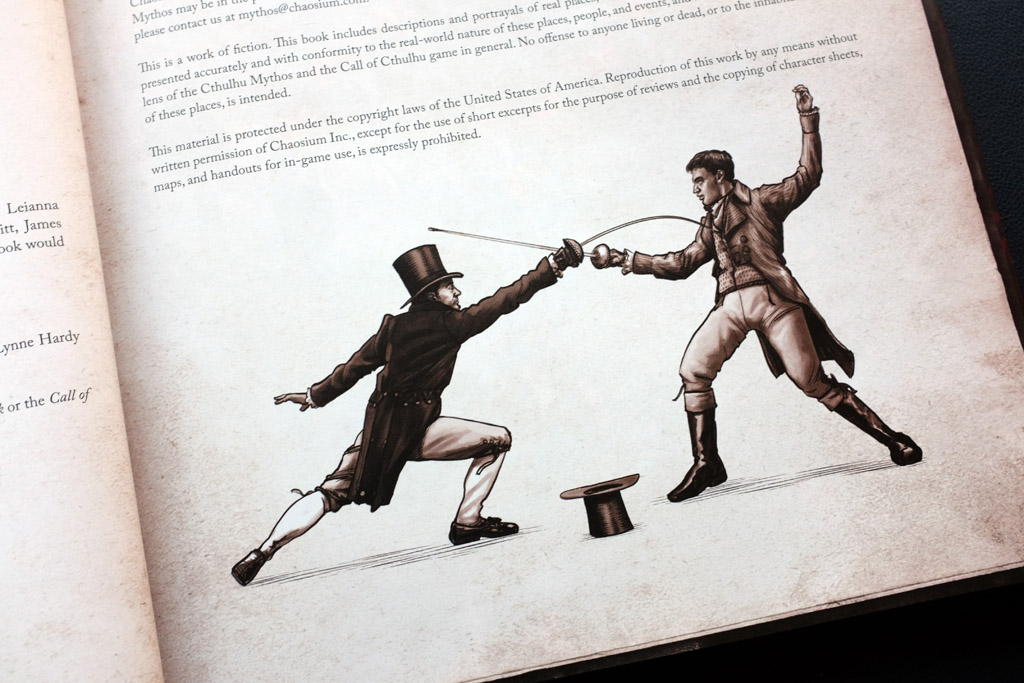
While Regency Cthulhu is designed for the standard investigative play of Call of Cthulhu, it also includes full support for Pulp Cthulhu. For players who prefer “more action-movie worthy scenes,” the book offers rules for dueling swords, flintlock pistols, and higher-octane encounters. This dual-compatibility ensures that the book serves:
-
The Historian: Those who delight in the “fascinating historical detail” of the Napoleonic era and the rigid class structures of the 19th century.
-
The Janeite: Fans of Austen and the Brontës who want to see their favorite literary tropes subverted by cosmic horror.
-
The Strategist: Professionals and seasoned players who enjoy the “elegant and easy to understand” modifications to the core rules, particularly the social chess of the Reputation system.

Commercial Licensing and Community Content
For those looking to monetize their creative output using the Regency Cthulhu setting—be it through actual-play podcasts, custom soundscapes, or third-party scenarios—the rules are governed by Chaosium’s Miskatonic Repository and general commercial licenses.
Like many of Chaosium’s modern releases, raw audio generated from partnered platforms like Syrinscape (which offers a dedicated Regency Cthulhu SoundPack) is generally intended for personal or streamed play under specific community guidelines. However, creators wishing to sell standalone music or sound design for commercial applications must typically secure a separate license, as the core book content and its associated assets remain the intellectual property of Chaosium Inc.
A Gothic Triumph
By marrying the biting satire of the Regency period with the soul-crushing reality of cosmic horror, Peregrine and Hardy have created something unique with Regency Cthulhu: a game where the most frightening thing in the room isn’t necessarily the monster, but the person holding the tea tray.