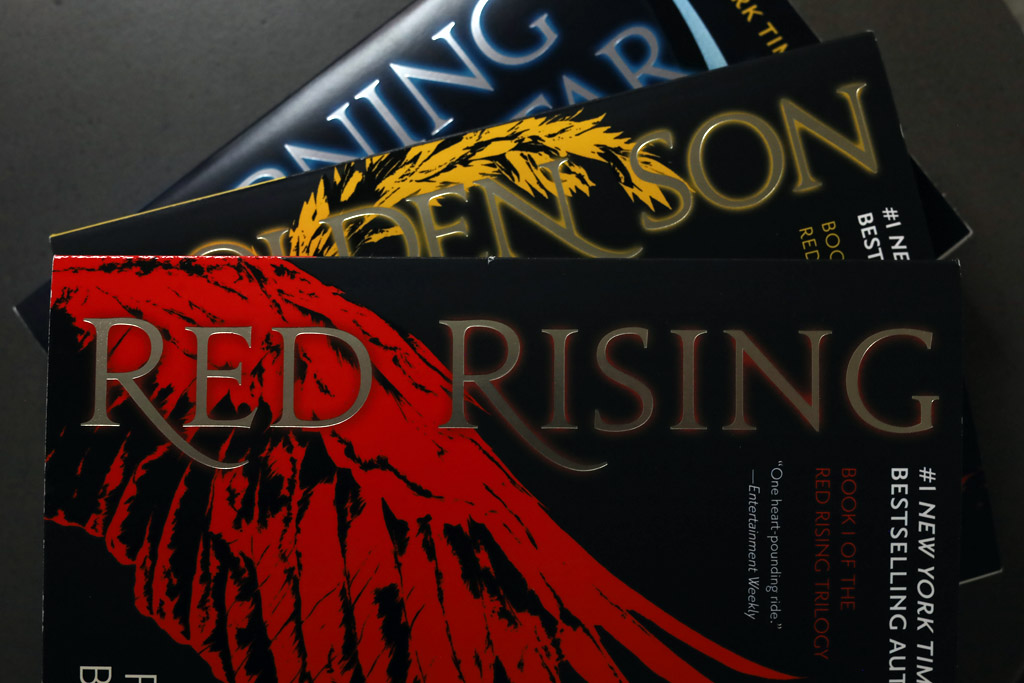
The Mars saga that started above a garage
When Red Rising hit shelves on January 28, 2014, it sold readers a hard-edged fantasy of social mobility on Mars. A miner from the bottom caste gains access to the ruling class and chooses sabotage over gratitude. The author, Pierce Brown, built the book into the opening movement of a trilogy for Del Rey Books that moved quickly through 2015 and 2016.
The draw sits in its view of status. Brown writes power as something practiced in rooms, enforced by ritual, and protected by people who like the arrangement. The series reads fast, yet it stays fixated on a blunt question. What does it cost to rise inside a system designed to keep you down.
Pierce Brown, before the trilogy had a readership
Brown grew up moving through several states, then studied political science and economics at Pepperdine University. After college he worked a string of jobs while he tried to sell a novel. He has described a stretch of writing while living above his parents’ garage in Seattle, the kind of logistical detail that shows up in the books as impatience with comfort.
That biography matters because the trilogy runs on lived observations. People sort themselves. Institutions protect their favorites. Language becomes a border control. Brown treats those dynamics as plot, not decoration.
The influences he cites and why they fit the material
Brown has pointed to Antigone as a spark. In a 2014 interview, he described rereading the play while hiking in the Cascade Range and thinking about a vulnerable figure who can still threaten “cold power.”
He has also named The Count of Monte Cristo as a close tonal parallel, alongside bigger science-fiction touchstones. That influence shows up in the trilogy’s patience for long planning and social games that run on debt, favors, and memory.

Red Rising, the first book
The opening novel builds a caste society and then drops a single character into its machinery. Brown keeps the focus tight. Work, fear, loyalty, and the lure of advancement drive the early pages. He writes hierarchy as a daily experience, felt in bodies and schedules and small permissions.
The book then turns toward elite culture and the way it trains people to enjoy control. Brown loves the rules of status. He loves the performance of it. He also shows the damage it does to friendships and judgment, even before anyone throws a punch.
Golden Son expands the world
The second book widens the stage. The story leans into politics, military leverage, and coalition-building. Brown pays attention to how power moves in public, and how it moves when the doors close. Plans require allies. Allies require risk. Risk rarely stays contained.
This volume also sharpens Brown’s sense of pace. He stacks scenes with urgency and treats strategy as character. People reveal themselves in the choices they make under pressure, not in speeches.
Morning Star carries the bill
The third book completes the first arc and spends real time on the mechanics of revolt. Movements need logistics. They need leaders who can persuade. They need people who hold a line when the line stops feeling heroic. Brown keeps the plot moving, yet he makes room for exhaustion and the moral clutter that follows any campaign for power.

Why the trilogy keeps finding new readers
The books offer a crisp premise and a steady escalation, and those things matter. The deeper reason sits in Brown’s obsession with rank. He understands how people adapt to unjust systems, then defend them as normal. He understands the private appeal of belonging, even when belonging asks for submission.
That clarity makes the series portable. Readers can map it onto workplaces, schools, and governments without much strain. The trilogy takes place on Mars, yet its social logic feels familiar.
The audiobooks and the voice many readers picture
The audiobooks built their own loyal audience. Many listeners connect the saga’s sound to narrator Tim Gerard Reynolds, whose performances have circulated alongside the books since the beginning.