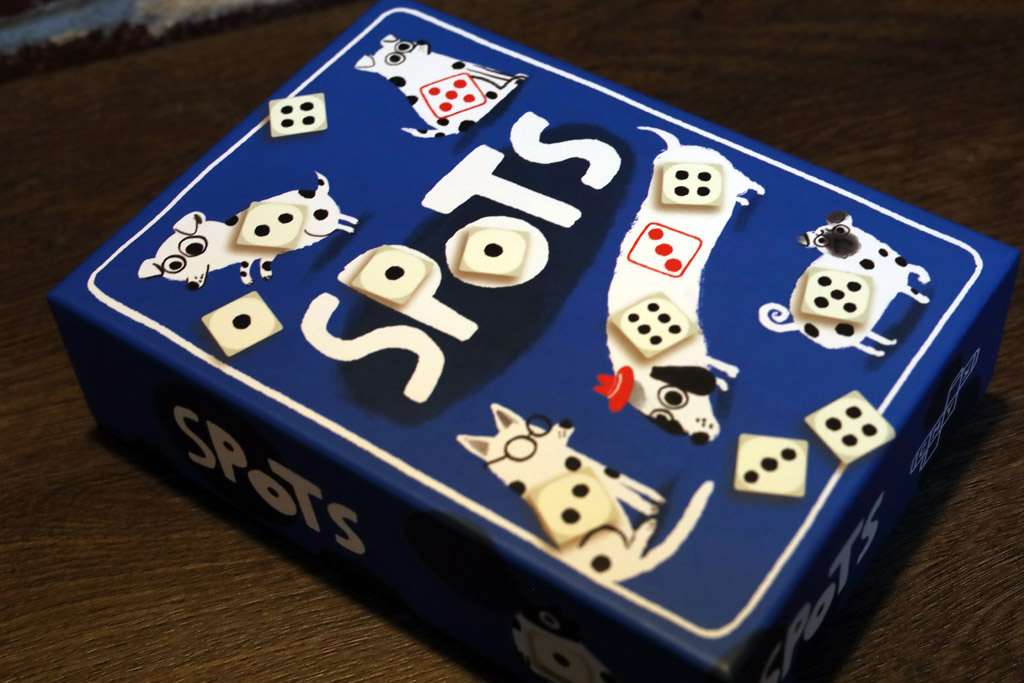
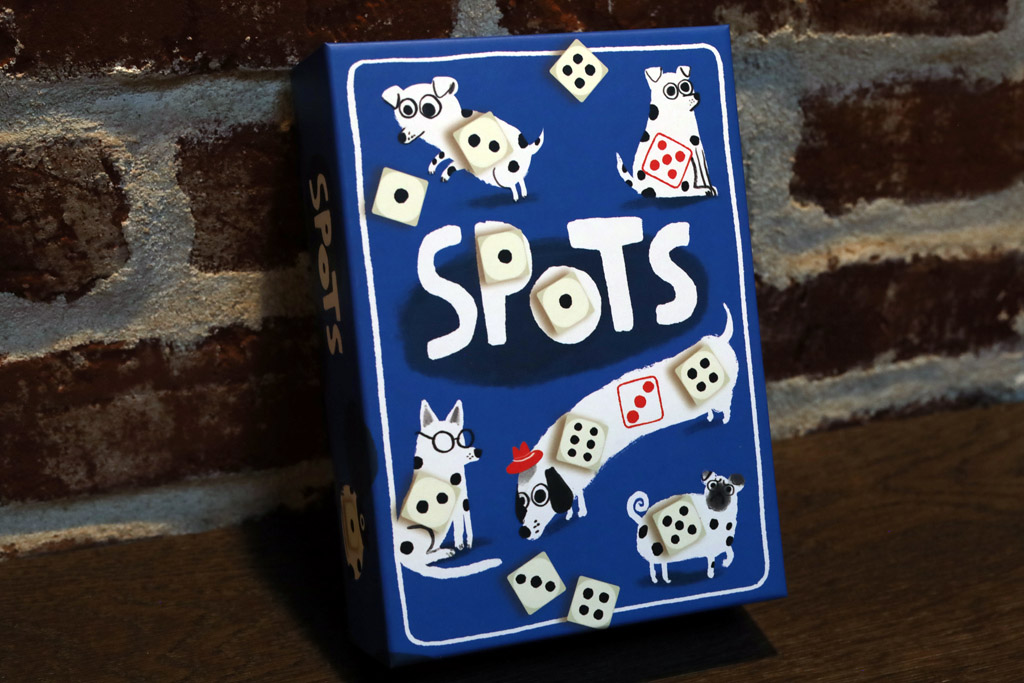
Spots (2022) is a push-your-luck dice game from CMYK where you “complete dogs” by matching dice results to the spot values printed on dog cards. Jon Perry designed it alongside Alex Hague and Justin Vickers, and illustrator John Bond supplies the clean, funny dog art. Your goal stays simple: score six dogs before anyone else. The tension comes from how quickly a safe turn turns prickly once your yard starts filling up. CMYK’s own pitch nails the vibe in a single sentence: Dogs have spots, dice have spots.
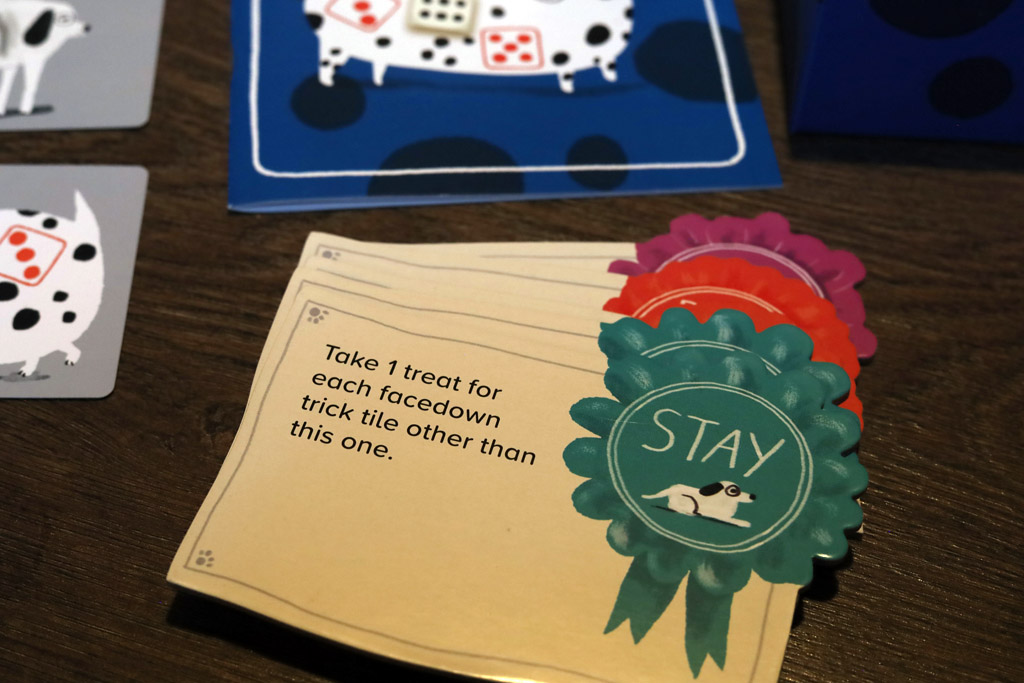
Pick a trick, roll dice, place what you can
On your turn, you choose one of two actions: do a trick or score your dogs. Most turns start with a trick tile. You pick a faceup tile, flip it facedown, and follow its steps in order (some steps let you repeat them if you want to keep pressing).
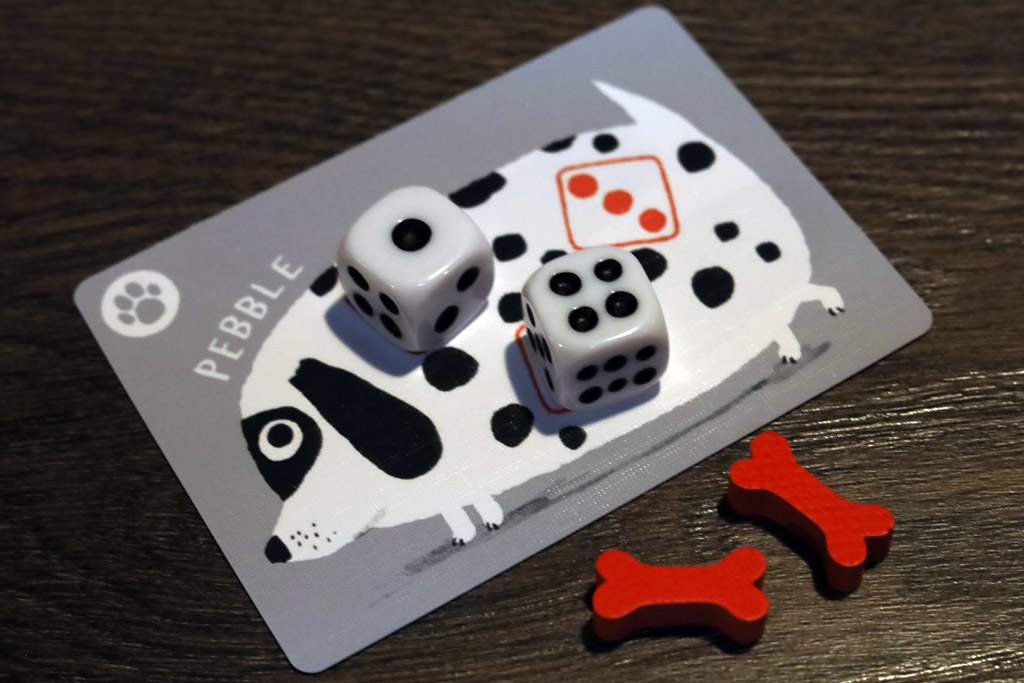
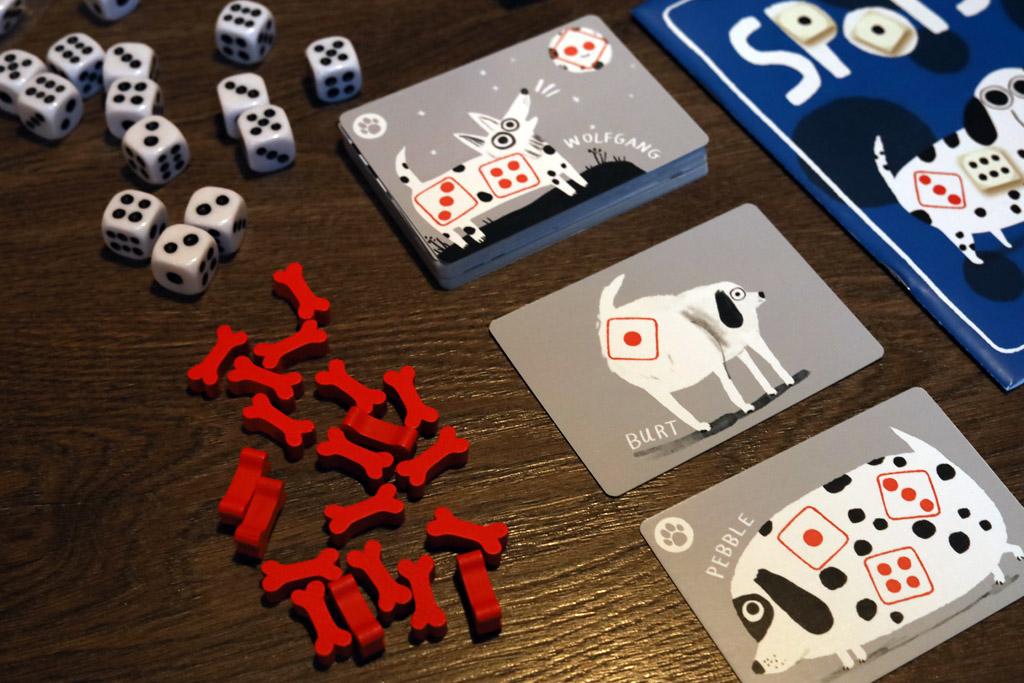
After each roll, you place dice onto matching numbered spaces on your face-up dog cards. A die showing 4 goes on a “4 spots” space, and so on. Any die you can’t (or won’t) place goes into your yard instead.
That one rule—every die must land somewhere—does most of the design work. It keeps the pace quick and forces real decisions instead of wishful rolling.
The Yard and the Risk of Busting
Your yard holds “buried” dice. Add up the spots on those buried dice. If the total ever goes above 7, you bust. Busting ends your turn immediately, wipes out dice on your dogs, and clears your yard too.
Treats give you a lifeline. Right after you roll—but before you place or bury—you may spend 1 treat to reroll the entire roll. You reroll all dice from that roll, even the ones you liked. That detail matters. It turns a reroll into a real choice instead of a free edit button.
Tricks and Worker Placement
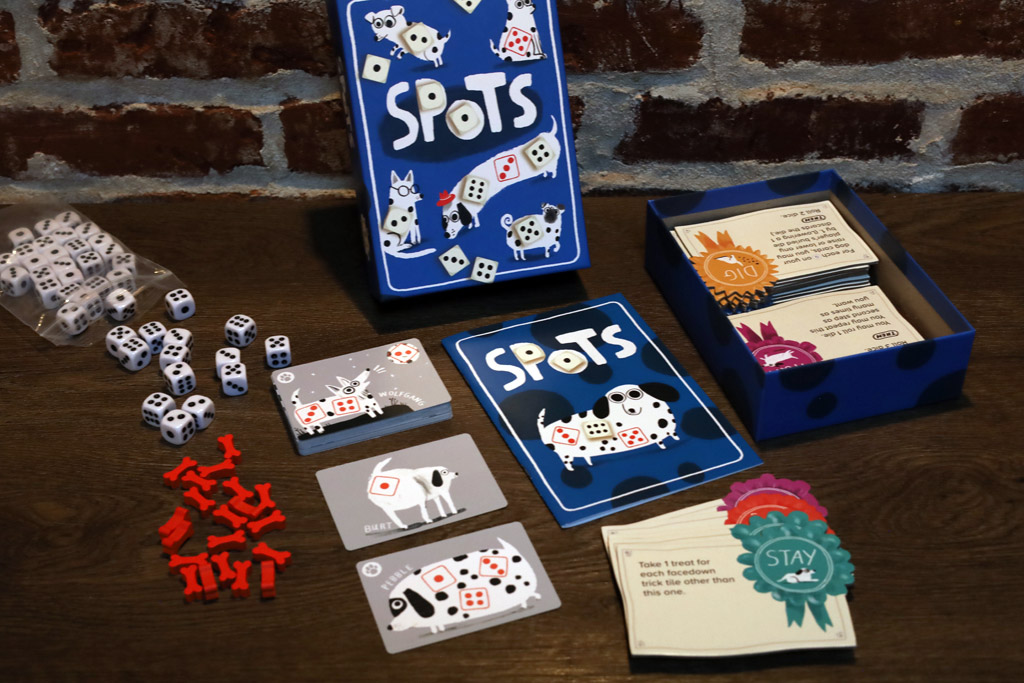
The trick tiles create the game’s light strategy and player interaction. Once you use a trick tile, it flips facedown and stays unavailable. When only one faceup tile remains at the start of a turn, the game drops a treat onto that last tile, then flips all trick tiles faceup again. That little “treat on the last tile” rule quietly shapes the table talk—people notice it, and they plan around it.
In a Reddit AMA, Jon Perry explained the intent in plain language: they “moved away” from the standard push-your-luck rhythm by using a “rotating menu of 6 actions,” and the temporary lockout adds interaction.
So yeah—this isn’t worker placement. It’s a shared action menu with scarcity that refreshes on a timer, and it keeps everyone watching everyone else.
You score dogs in two ways
The win condition stays the same no matter which path you take: the first player to reach six scored dog cards wins. Your strategy depends on your tolerance for risk.
Slow and steady (banking):
Instead of doing a trick, you take a full turn to score. You flip every completed dog card facedown (scored), discard the dice on them, and draw replacements for each dog you scored. You must score all completed dogs when you choose this action.
Fast and risky (instant score):
If you complete all your face-up dogs during a trick, you score them immediately (same process as above), then keep going with the rest of the trick. You still have to place/bury dice first, and a bust cancels the moment.
A few beginner tips for Spots
Treats belong to the “save me” category. Spend them when a roll forces a big bury that pushes your yard past 7. You reroll everything, so don’t burn treats on mild annoyances.
Score in batches. If you can flip two completed dogs with the “score your dogs” action, you shrink future risk and keep progress locked.
Watch the tile cycle. That last faceup trick tile will carry a treat after the reset trigger. Sometimes taking the “lonely tile” makes sense just for the reroll fuel.
Simple, funny, and tactile on purpose
John Bond’s dogs look clean and friendly, with enough personality to make players pick favorites fast. Bond works as an illustrator/author based in the UK, known for children’s publishing work like Mini Rabbit Not Lost and other projects beyond games. That background shows in Spots: the dogs read clearly across the table, and the graphic choices stay functional.
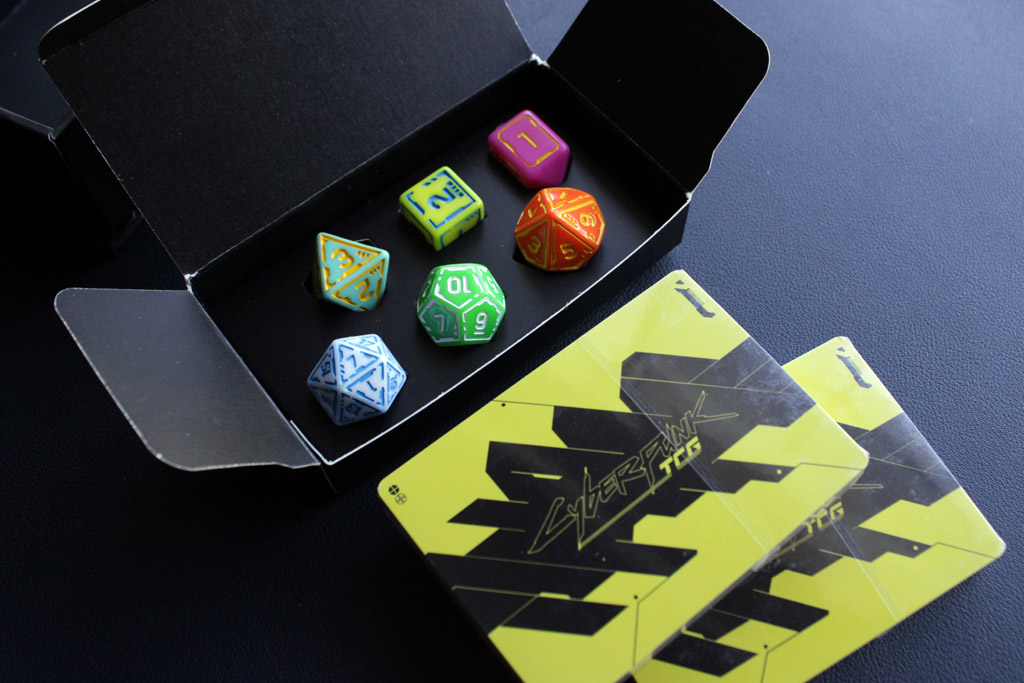
Component-wise, CMYK leans into the theme. Reviewers have noted the dice use spot-like pips rather than perfectly uniform dots, which makes the dice feel like part of the dog-world instead of generic cubes.
Spots Quick Facts
Year Released: 2022
Designers: Jon Perry, Alex Hague, Justin Vickers
Illustrator: John Bond
Publisher: CMYK
Players: 1–4
Recommended Age: 10+
Play Time: ~30 minutes
MSRP: $24.99