Few works in modern literature have inspired as much analysis, debate, rereading, and scholarly obsession as The Book of the New Sun, Gene Wolfe’s landmark science-fantasy epic. More than four decades after its publication, readers still gather on forums, podcasts, YouTube channels, and dedicated discussion groups to unpack individual chapters, trace hidden clues, and argue over meanings that Wolfe deliberately left beneath the surface. Entire books have been written about reading Wolfe. Entire careers have been shaped by interpreting him.
The Engineer Who Became a Literary Giant
Before becoming one of the most respected writers in speculative fiction, Gene Wolfe lived a life that seems almost improbable in hindsight. Born in Brooklyn, New York in 1931, Wolfe served in the Korean War, earned an engineering degree, worked as an industrial engineer, and later became an editor for an engineering trade publication. He also designed the complex cooking machinery used in the manufacture of Pringles potato chips, a fact that has become one of the most repeated anecdotes in discussions of his life.

His fiction reflected that engineer’s precision. Every sentence carries weight. Details that seem incidental often acquire significance hundreds of pages later. References hide inside references. Meanings fold inward. Wolfe published more than thirty novels and hundreds of short stories, earning a reputation as one of the most intellectually demanding and rewarding writers in science fiction. His work drew admiration from fellow authors, critics, and academics who recognized something unusual in his approach to storytelling.
A Dying Earth That Feels Ancient and Future at Once
Published between 1980 and 1983, The Book of the New Sun takes place on Urth—a far-future Earth where the sun is weakening and civilization rests atop layers of forgotten history. The setting feels medieval at first glance. There are guilds, citadels, swords, and rituals. Yet strange technologies appear in the background. Ancient artifacts survive long after their creators have been forgotten. Scientific wonders resemble miracles because nobody remembers how they work. Wolfe never pauses to explain the world. He refuses the familiar science-fiction habit of stopping the narrative to provide exposition. Instead, readers encounter Urth exactly as its inhabitants do. Understanding arrives gradually, often long after an event has passed.
Severian: Literature’s Most Famous Unreliable Narrator
At the center of the story stands Severian, who presents himself as the author of his own memoir. He claims to possess a perfect memory. That claim becomes one of the novel’s most intriguing complications. Readers quickly discover that remembering everything is not the same as understanding everything. Severian recounts events from his perspective, describes people according to his impressions, and often reports experiences without recognizing their broader significance. The gap between what Severian sees and what the reader eventually infers generates much of the novel’s richness.
Four Books, Two Volumes, One Monumental Novel
The publication history can seem confusing to newcomers. Originally, The Book of the New Sun appeared as four separate novels:
-
The Shadow of the Torturer (1980)
-
The Claw of the Conciliator (1981)
-
The Sword of the Lictor (1982)
-
The Citadel of the Autarch (1983)
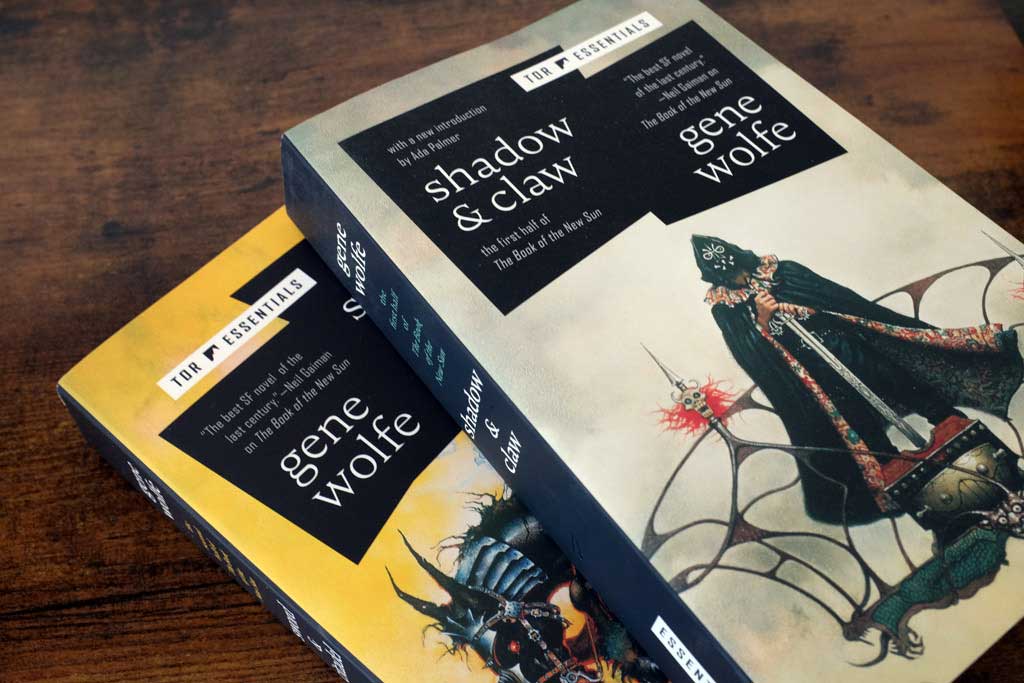
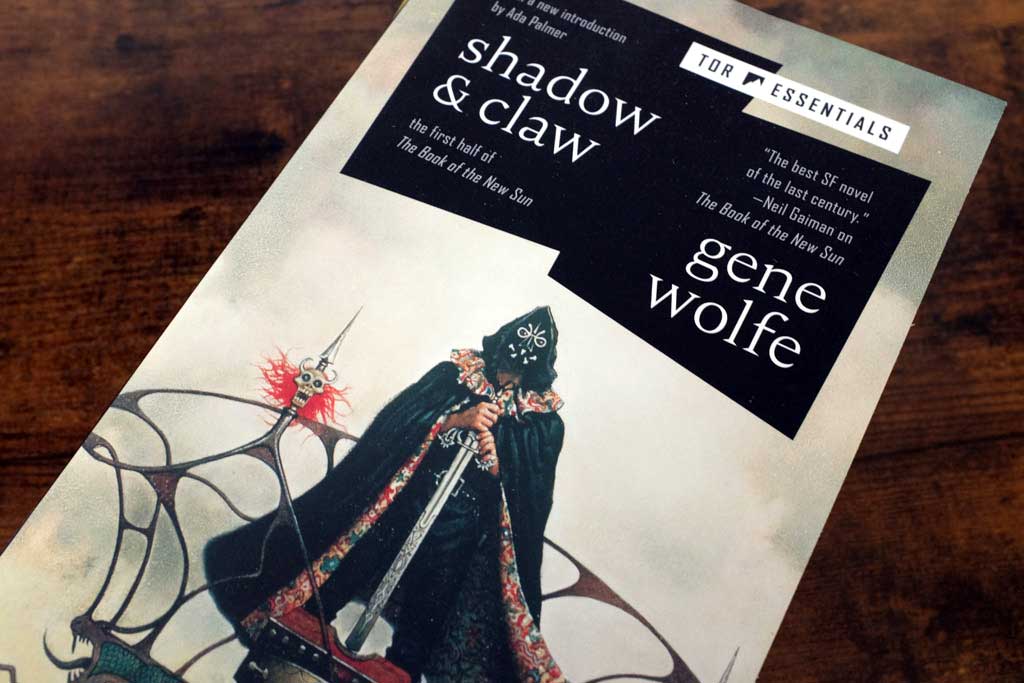
Wolfe had largely completed the entire work before publication began, and many readers view the four volumes as a single novel released in installments. Today, the most common editions are published as two larger, accessible omnibus volumes:
-
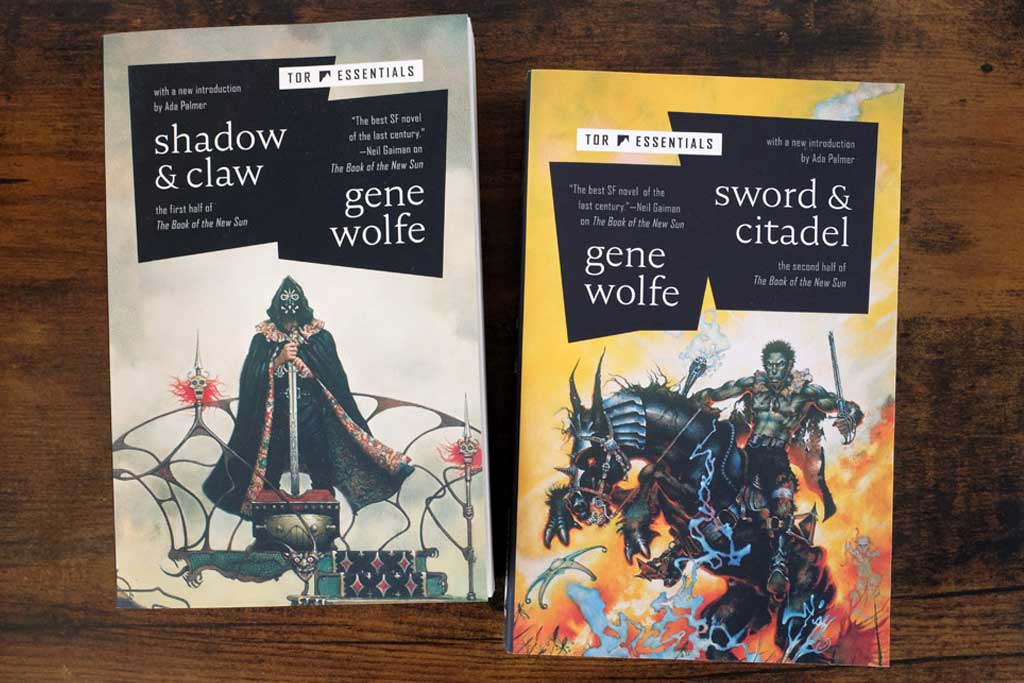
Shadow & Claw: This edition combines The Shadow of the Torturer and The Claw of the Conciliator.
-
Sword & Citadel: This edition combines The Sword of the Lictor and The Citadel of the Autarch.
These omnibus editions have become the standard entry point for many contemporary readers and are frequently recommended within the Wolfe community.
Where The Urth of the New Sun Fits
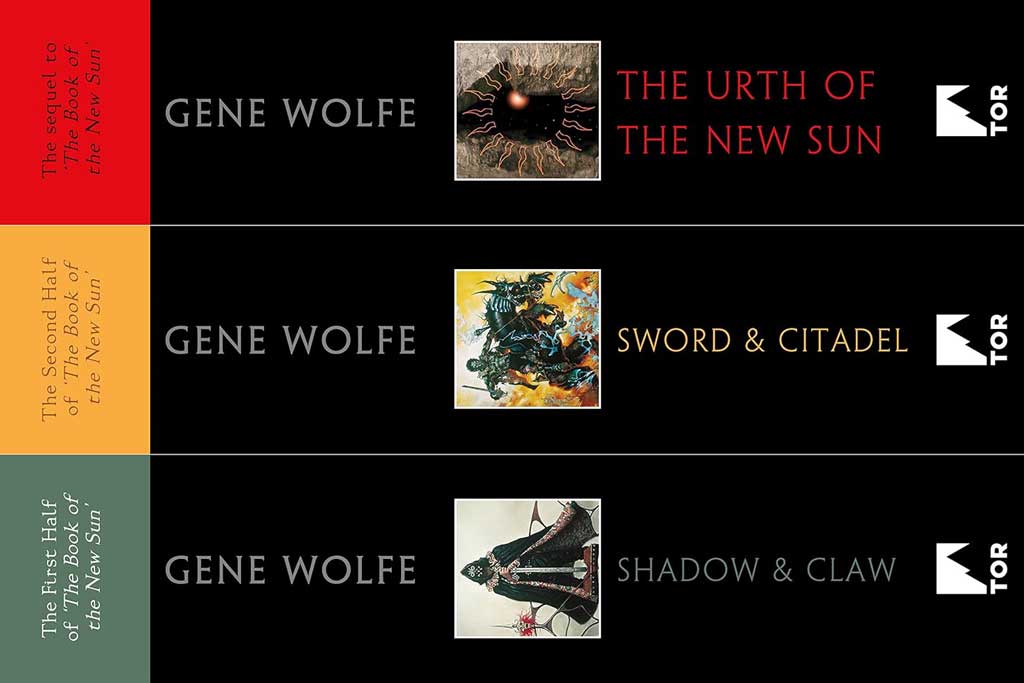
Then there is The Urth of the New Sun. Published in 1987, four years after The Citadel of the Autarch, the novel occupies a unique position within the series. Wolfe described it as a continuation rather than a separate project, and many readers consider it the fifth volume of The Book of the New Sun. Others refer to it as a coda—a final movement following the conclusion of the original four-book sequence.
For new readers, the practical answer is straightforward: Read the four books of The Book of the New Sun first, then read The Urth of the New Sun. Discussion of why it exists often drifts into spoiler territory, so veteran Wolfe readers tend to leave the matter there. The experience of discovering its place within the larger narrative remains one of the rewards of reading Wolfe in publication order.
The Internet Never Stopped Talking About This Book
Most novels enjoy a brief cultural moment before fading into the background. The Book of the New Sun has followed a completely different path.
Thousands of online discussions continue to examine individual scenes, symbols, and narrative choices. Dedicated subreddits analyze chapter-by-chapter details. Podcasts spend dozens of episodes exploring the text. YouTube creators produce multi-hour breakdowns attempting to decode Wolfe’s layered storytelling. Readers compare notes, challenge interpretations, and return to the books years after finishing them.
That continuing conversation exists because Wolfe constructed a novel that rewards investigation. Questions linger. Clues surface on subsequent readings. Small details expand into major revelations. The books resist becoming fully solved.
A Literary Landmark Hiding in the Science Fiction Section
Wolfe’s achievement extends beyond genre fiction. His prose draws from literary traditions stretching through history, theology, mythology, philosophy, and classical literature. His narrative techniques invite comparisons to modernist writers who expected readers to participate actively in the act of interpretation. Yet The Book of the New Sun remains remarkably readable on a sentence-by-sentence level. The pages move with the momentum of an adventure story even as deeper currents flow beneath them.
Readers arrive expecting science fiction, fantasy, or perhaps a blend of both. What they discover is something much harder to classify. It is a memoir written by a man whose understanding remains incomplete. A future so distant it resembles antiquity. A narrative assembled from memory, symbolism, and hidden connections. Four decades after its publication, The Book of the New Sun continues to occupy a category largely its own—a work discussed not merely because people love it, but because they are still trying to understand it.