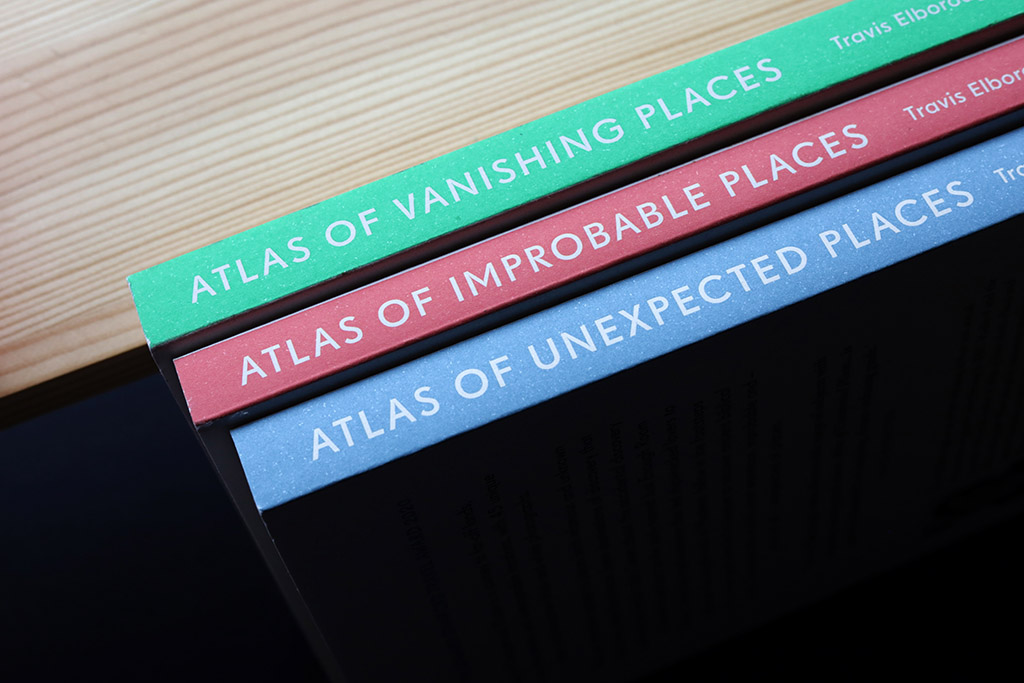
Travel publishing has long favored lists: the world’s best beaches, hidden cities, remote islands, forgotten ruins. Travis Elborough approached the subject differently. His atlas books focused on places shaped by collapse, isolation, failed ambition, environmental change, and historical accident. The destinations mattered, but the larger subject was human behavior—the urge to build in impossible landscapes, abandon entire communities, redraw borders, or preserve myths long after the original place disappeared.
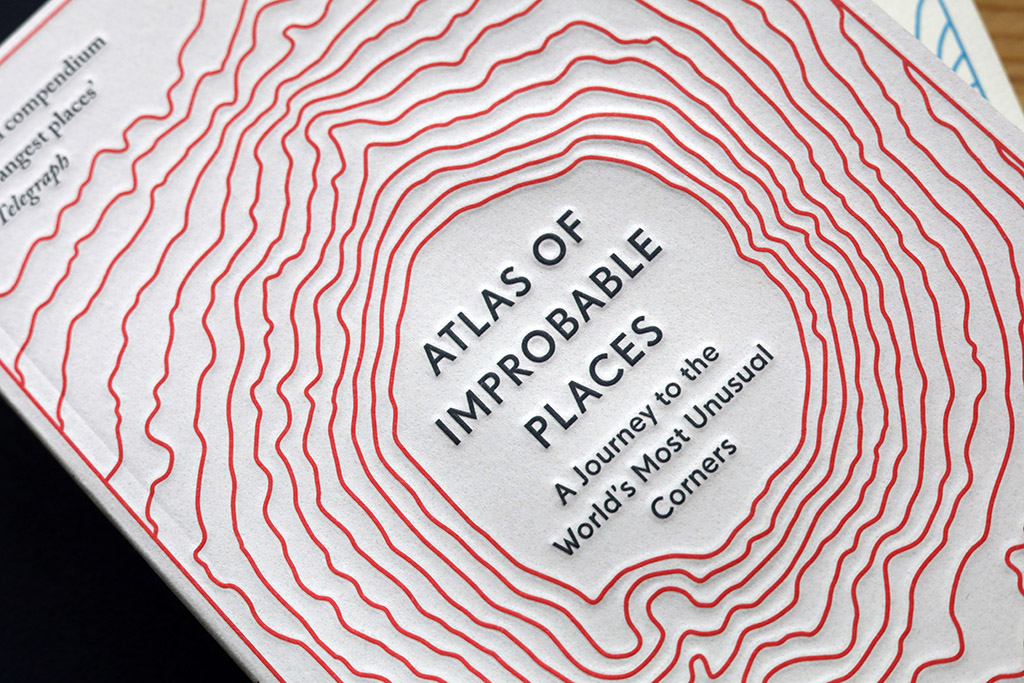
The Foundation: Atlas of Improbable Places (2016)
The series began with Atlas of Improbable Places, published in 2016. Elborough, a British cultural historian and essayist, had already established himself through books examining overlooked aspects of modern life: London buses, seaside culture, vinyl records, and postwar British design. His journalism appeared regularly in publications including The Guardian, The Observer, and The New Statesman. Years spent writing about infrastructure, urban memory, and public space shaped the tone of the atlas project. He approached geography as a cultural record rather than a travel guide.
Created with cartographer Alan Horsfield, Atlas of Improbable Places assembled more than fifty locations from around the world. Some were nearly inaccessible. Others sat in plain sight while remaining largely unknown outside regional history. Elborough included underground cities in Turkey, abandoned Arctic settlements, desert ghost towns, artificial islands, militarized exclusion zones, and communities built in landscapes hostile to long-term survival. The entries combined concise historical reporting with visual cartography and archival material.
The book found a substantial readership in Britain and internationally. Reviewers responded to the depth of research and the literary quality of the writing. Coverage in British newspapers emphasized the book’s ability to transform obscure geography into social history. Readers often described it less as a travel book than a work of narrative nonfiction organized through maps. The commercial response gave the publisher a framework for expanding the concept into a continuing series.
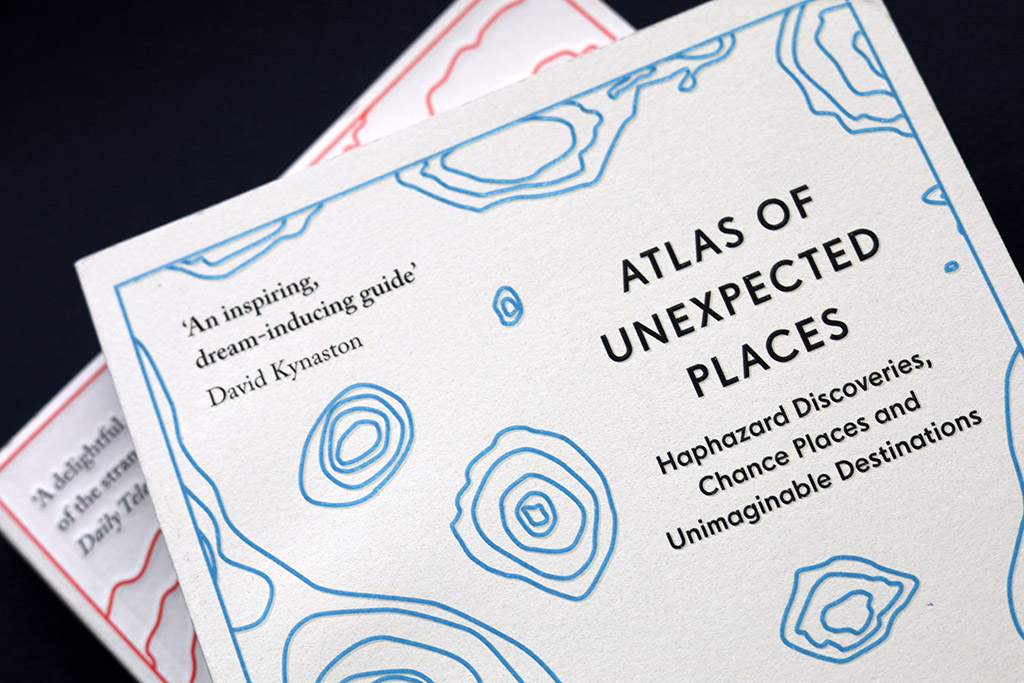
Expanding the Map: Atlas of Unexpected Places (2018)
Atlas of the Unexpected followed in 2018 as the third volume in the series. While originally published under that title, it was recently retitled Atlas of Unexpected Places for its 2024 paperback release to bring it in line with the “Atlas of… Places” branding of the rest of the series.
This installment widened the scope beyond remote or physically unusual destinations. Elborough focused more heavily on places associated with improbable historical events, scientific oddities, political experiments, and cultural mythology. The reporting moved further into historical narrative. Cities, islands, monuments, and forgotten territories became entry points into stories about migration, empire, engineering, religion, and conflict. The atlas format remained intact, though the series had begun shifting toward cultural history told geographically.
The Urgent Shift: Atlas of Vanishing Places (2019)
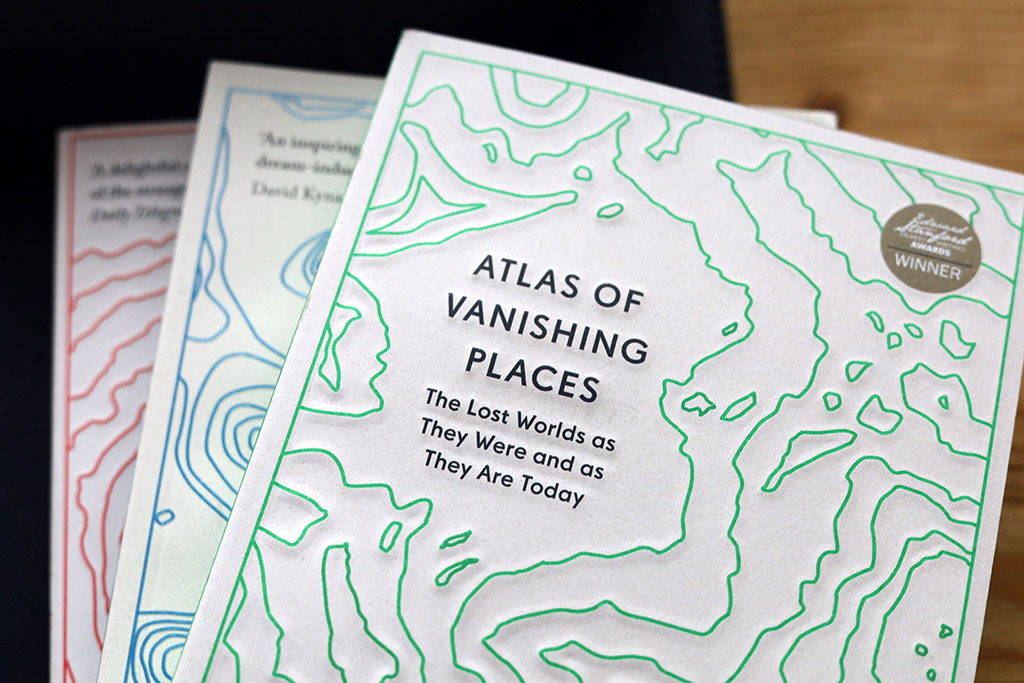
he strongest critical response arrived with Atlas of Vanishing Places in 2019. The subject carried greater urgency. Rising sea levels, industrial decline, environmental destruction, war, and redevelopment formed the foundation of the book. Entire communities faced disappearance. Coastlines eroded. Lakes dried out. Historic districts vanished under modern construction projects. Elborough documented places already lost alongside locations approaching extinction.
The emotional register of the series changed with that volume. Earlier books carried elements of curiosity and discovery. Atlas of Vanishing Places centered memory, fragility, and impermanence. Reviewers noted the shift immediately. The book later received the Edward Stanford Travel Writing Award for Illustrated Travel Book of the Year in 2020, recognition that expanded the series beyond niche travel publishing audiences.
.
Why the Atlas Series Matters Today
Taken together, the volumes in this series form a broader study of how societies shape land and how land records human ambition. Elborough avoided the language of conventional exploration writing. His books rarely centered the traveler. The focus stayed on the forces that create unusual places in the first place: ideology, economics, climate, war, engineering, migration, and neglect.
The series arrived during a period when digital mapping made the planet feel fully indexed and searchable. Elborough’s work pushed in the opposite direction. The books argued that mystery still survives in modern geography, often buried inside infrastructure, abandoned settlements, political borders, or landscapes disappearing faster than official maps can record them.